 English
 العربية
 bosanski jezik
 Български
 Català
 粤语
粤语 中文(漢字)
 Hrvatski
 Čeština
 Dansk
Dansk Nederlands
 Eesti keel
 Suomi
Suomi Français
 Deutsch
 Ελληνικά
 עברית
עברית Magyar
 Italiano
 日本語
日本語 한국어
한국어 Latviešu valoda
 Bahasa Melayu
 Norsk
Norsk پارسی
پارسی Polski
 Português
 Română
 Русский
 Cрпски језик
 Slovenčina
 Slovenščina
 Español
 Svenska
 தமிழ்
தமிழ் ภาษาไทย
 Tiếng Việt

전기 자동차는 세 가지 주요 방법을 사용하여 충전 할 수 있습니다: 수준 1 (가장 느린), 수준 2 (미드 레인지), 그리고 레벨 3 (DC 빠른 충전, 가장 빠른). 이러한 방법은 전압 및 충전 속도가 다릅니다. 수준 1 표준 120V 콘센트를 사용합니다, 수준 2 240V 콘센트를 사용합니다, 그리고 레벨 3 DC 빠른 충전기를 사용합니다, 공공국에서 종종 발견됩니다.
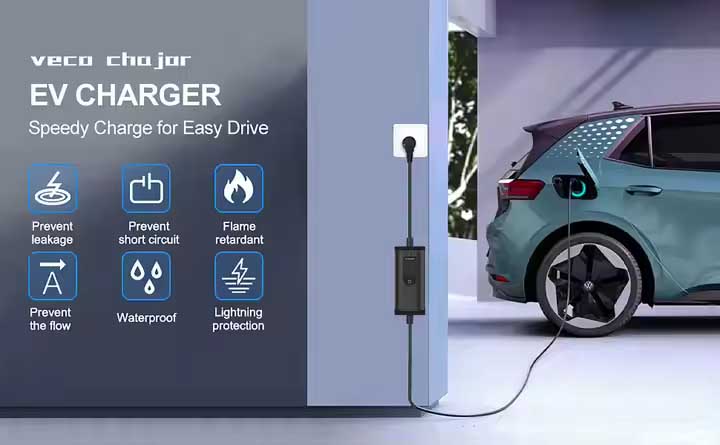
Electric Vehicle Charging Levels, Modes and Types Explained,North America Vs. Europe Charging cables and plug types
Detailed Explanation:
수준 1 충전 중 (120뷔와):
This is the slowest method, using a standard household outlet. It’s suitable for overnight charging or when speed isn’t a priority.
수준 2 충전 중 (240뷔와):
This method provides a faster charge than Level 1, typically taking 4-8 hours for a full charge. It’s commonly used at home and in public charging stations.
수준 3 충전 중 (DC 빠른 충전):
This is the fastest method, found at public charging stations, and can add significant range quickly (예를 들어, 80% ~에 30 분).
Charging Types and Standards:
AC Charging:
수준 1 그리고 2 charging utilize AC power, which is then converted to DC power by the vehicle’s on-board charger.
DC 빠른 충전:
This uses DC power directly, eliminating the need for the vehicle’s on-board charger to convert AC to DC.
Charging Standards:
다양한 차량과 충전소는 다양한 플러그 유형을 사용할 수 있습니다. (예를 들어, 유형 1, 유형 2, CCS). CCS 커넥터는 AC 및 DC 충전을 모두 처리할 수 있으므로 일반적으로 선택됩니다..
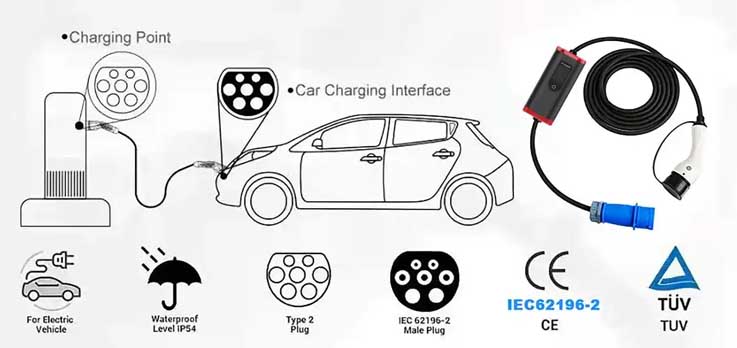
16에이, 32충전기 3 수준 2 레벨 또는 1 레벨 플러그, 5m 케이블 전기 자동차 휴대용 충전기
유형의 차이점은 무엇입니까 1 유형 2 및 유형 3 EV 충전기?
고출력 AC파일:
게다가, 우리나라의 국내 여건상 고출력 AC 파일이 거의 없는 것으로 나타났습니다.. 우리 나라의 민간 AC 전력망의 전압은 고정된 값입니다., 단상은 220V입니다., 3상은 380V이고 (라인 전압). AC 충전 전류 국가 표준에는 권장 값이 있습니다., 10A/16A/32A/63A. 동시에, 표준에서는 단상 충전 전류가 32A를 초과해서는 안 된다고 규정하고 있습니다.. 현재 3상 충전 규모에 대한 구체적인 규정은 없다.. 현재, 3상 충전 전류는 16A에서 63A 사이입니다..
이 배열과 조합을 바탕으로, 2.2kW의 충전 전력을 계산할 수 있습니다, 3kW, 7kW, 11kW, 21kW, 41kW, 등.
220V 단상 충전의 최대 전력은 220V x 32A입니다., 약 7kW 입니다. 최소 3상 충전은 다음과 같습니다. 380 타임스 16 곱하기 제곱근 3, 약 11kW입니다.. 주거지역의 대부분의 배전선로와 용량은 단상 32A를 지원하기 때문에, 많은 모델에는 7kW의 가정용 충전 파일이 장착되어 있습니다..
대부분의 상업용 충전 파일은 상대적으로 충분한 전력 분배 용량을 가지고 있습니다.. 더 높은 충전 효율을 위해, 유통율과 경제적 이익, 전력은 일반적으로 11kW에서 시작됩니다., 아니면 그보다 더 높거나. 하지만, 38041kW의 출력을 지닌 V 63A AC 파일도 마찬가지로 드물다..
고사양 차량용 충전기
AC 충전 파일의 전력이 높아질수록, 필요한 온보드 충전기 및 차량 소켓의 사양이 높을수록, 무게, and the interior space layout of the vehicle will be higher, and the costs of the car companies will also increase accordingly. Car companies rarely equip vehicles with high-standard on-board chargers. Without high-standard car chargers, high-power AC piles will be useless.
Car charging
If this is a last resort, you can directly use an ordinary three-prong household socket, which has two specifications: 10A and 16A. It can be used when the car is not in urgent need. The advantage is that it can make full use of low power periods for charging and reduce charging costs. The more important advantage is that it can deeply charge the battery, improve battery charging and discharging efficiency, and extend battery life.
Charging on rainy days
There is no need to worry about this problem. Charging the car on rainy days has been considered from the beginning of the design. Whether it is fast charging or slow charging, the charging port is recessed and designed with an inward slope, and is also designed with an insulating sealing ring around it. If you are worried about a small amount of rainwater entering the charging port, you don’t have to worry about water rising up. The rainwater will flow out from the drainage hole below.
Each hole in the fast/slow charging port has its own function.
Taking slow charging as an example, the top two holes are monitoring holes (blue boxes). Only when these two holes are in complete contact with the charging gun will current flow. The remaining five holes are only responsible for charging. 충전 총의 각 구멍은 서로 절연되어 있습니다.. 상단 2개의 구멍에 있는 연결 부분 (①, ②) 차량 충전 포트 위의 모니터링 구멍 2개에 연결해야 합니다.. 충전총 연결부분이 매우 짧게 설계되었습니다.. 충전총이 충전 포트에 완전히 연결된 경우에만 전류가 흐릅니다.. 충전총을 막 꺼내려고 할 때, 상부 모니터링 부분은 먼저 연결을 끊고 전류가 계속 흐르도록 제한합니다.. .
충전 포트에는 다양한 예방 조치가 있을 뿐만 아니라, 충전 총도 방수입니다, IP65의 방진, 방수 등급으로. 그러므로, 보통의 비나 폭우에도 충전 포트가 위험해지지 않습니다.. 차량이 저지대에 있거나 충전 포트가 물에 잠긴 경우를 제외하고, 단락 위험은 충전할 때만 발생합니다..
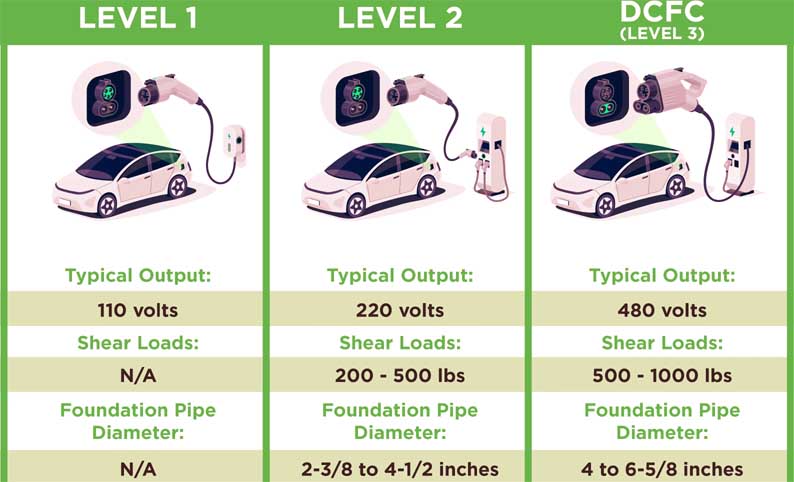
유형을위한 몇 가지 충전 방법 1, 2, 3 전기차