 English
 العربية
 bosanski jezik
 Български
 Català
 粤语
粤语 中文(漢字)
 Hrvatski
 Čeština
 Dansk
Dansk Nederlands
 Eesti keel
 Suomi
Suomi Français
 Deutsch
 Ελληνικά
 עברית
עברית Magyar
 Italiano
 日本語
日本語 한국어
한국어 Latviešu valoda
 Bahasa Melayu
 Norsk
Norsk پارسی
پارسی Polski
 Português
 Română
 Русский
 Cрпски језик
 Slovenčina
 Slovenščina
 Español
 Svenska
 தமிழ்
தமிழ் ภาษาไทย
 Tiếng Việt

การเลือกสายเคเบิลคู่บิดเกลียวสำหรับชุดสายไฟต้องได้รับการพิจารณาอย่างครอบคลุมเมื่อใช้ร่วมกับสถานการณ์การใช้งาน, ข้อกำหนดด้านประสิทธิภาพ, และปัจจัยด้านต้นทุน. การวิเคราะห์เฉพาะสามารถดำเนินการได้จากมิติต่อไปนี้:
1. สถานการณ์การใช้งานและข้อกำหนดด้านการทำงาน
สถานการณ์ต่อต้านการรบกวนทางแม่เหล็กไฟฟ้า
แนะนำให้ใช้สายคู่บิดเกลียว, และลักษณะการบิดเบี้ยวของสายไฟทั้งสองใช้เพื่อชดเชยการรบกวนสัญญาณในโหมดทั่วไป. เหมาะสำหรับสถานการณ์ที่ต้องการความเสถียรของสัญญาณสูง เช่น เซ็นเซอร์ความเร็วล้อของยานยนต์ และ CAN บัส.
สภาพแวดล้อมที่มีอุณหภูมิสูงหรือไฟฟ้าแรงสูง
Twisted pair cables made of high temperature resistant materials (such as aluminum foil layer + protective layer) should be selected. The temperature range should cover -40 to 200°C, and the withstand voltage should be above 600V. They are suitable for wiring harness assemblies of new energy vehicles.
Complex wiring environment
If you need to save space or reduce the difficulty of wiring, you can use twisted pair cables with injection molding fixation process. The static area is fixed by cable ties, staples, เป็นต้น, and the dynamic area is enhanced by injection molding process.
2. Structural design and performance parameters
Twisting density and pitch
The smaller the twisting pitch (such as 38.1~140mm), the stronger the anti-interference ability; the difference in pitch between adjacent pairs should be controlled within 12.7mm to reduce crosstalk.
Conductor material and insulation layer
The conductor is preferably a high-purity copper wire (เลขที่. 22~26) to ensure conductivity and flexibility26.
The insulation layer must take into account high temperature resistance and wear resistance, such as polyethylene (วิชาพลศึกษา) or polyvinyl chloride (พีวีซี) materials.
Shielding requirements
Unshielded twisted pair (UTP): ต้นทุนต่ำ, suitable for ordinary electromagnetic environments (such as home or office networks).
Shielded twisted pair (STP): add aluminum foil or braided copper mesh shielding layer, suitable for high-interference scenarios such as industrial control and vehicle-mounted knock sensors.
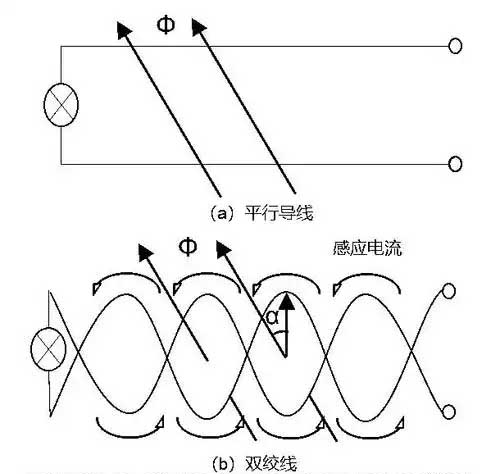
Use a Twist and Other Popular Wires to Reduce EMI-RFI
3. ประสิทธิภาพการส่งผ่านและข้อกำหนดมาตรฐาน
แบนด์วิธและอัตราการส่งข้อมูล
สำหรับสถานการณ์ทั่วไป, คุณสามารถเลือกหมวด 5e (1000เมกะบิตต่อวินาที) หรือหมวดหมู่ 6 (Cat6a, แบนด์วิธที่สูงขึ้น) สายคู่บิดเกลียว.
ชุดสายไฟรถยนต์ต้องเป็นไปตามมาตรฐานการส่งสัญญาณเฉพาะ (เช่นข้อกำหนดอัตรา CAN บัส).
การปรับมาตรฐานอุตสาหกรรม
ในด้านยานยนต์, มาตรฐานเยอรมัน (ฟราย), มาตรฐานญี่ปุ่น (สสส) หรือเลือกใช้สายไฟมาตรฐานอเมริกัน. สายไฟมาตรฐานของเยอรมันกลายเป็นกระแสหลักเนื่องจากมีการนำไปใช้งานอย่างกว้างขวาง.
ตรวจสอบประสิทธิภาพของสายไฟโดยอ้างอิงกับมาตรฐานแห่งชาติ (กิกะไบต์/T8139) และมาตรฐานของญี่ปุ่น (RECEIVED_D608) 3.
4. ข้อควรพิจารณาด้านต้นทุนและการบำรุงรักษา
การเพิ่มประสิทธิภาพต้นทุน
สายเคเบิลคู่บิดเกลียวที่ไม่มีการชีลด์มีราคาถูกกว่าสายเคเบิลที่มีชีลด์ และเป็นที่ต้องการบนสถานที่ตั้งที่ตรงตามข้อกำหนดการป้องกันสัญญาณรบกวน.
การติดตั้งและบำรุงรักษา
ตรวจสอบการระบุเปลือกด้านนอกของสายคู่บิดเกลียว (ผู้ผลิต, มาตรฐานการดำเนินงาน, ความยาวสายเคเบิล, เป็นต้น) เพื่อให้แน่ใจว่าเป็นไปตามข้อกำหนดของการสมัคร.
สายเคเบิลคุณภาพสูงที่มีความหนาแน่นของการบิดสม่ำเสมอและความแตกต่างของสีที่ชัดเจนสามารถลดข้อผิดพลาดในการติดตั้งและอัตราความล้มเหลวได้.
V. ขั้นตอนการคัดเลือกที่แนะนำ
1. ระบุสภาพแวดล้อม (อุณหภูมิ, แรงดันไฟฟ้า, แหล่งสัญญาณรบกวน) → 2. กำหนดข้อกำหนดด้านประสิทธิภาพการส่งข้อมูล (แบนด์วิธ, ประเภทสัญญาณ) → 3. เลือกวัสดุตัวนำและประเภทชั้นฉนวน → 4. ประเมินข้อกำหนดและต้นทุนการป้องกัน → 5. ตรวจสอบการปฏิบัติตามมาตรฐานอุตสาหกรรม → 6. ทดสอบความน่าเชื่อถือของตัวอย่าง.
โดยผ่านขั้นตอนข้างต้น, คุณสามารถคัดกรองโซลูชันสายคู่บิดเกลียวที่คุ้มค่าคุ้มราคาซึ่งเหมาะสมกับสถานการณ์เฉพาะได้อย่างเป็นระบบ.
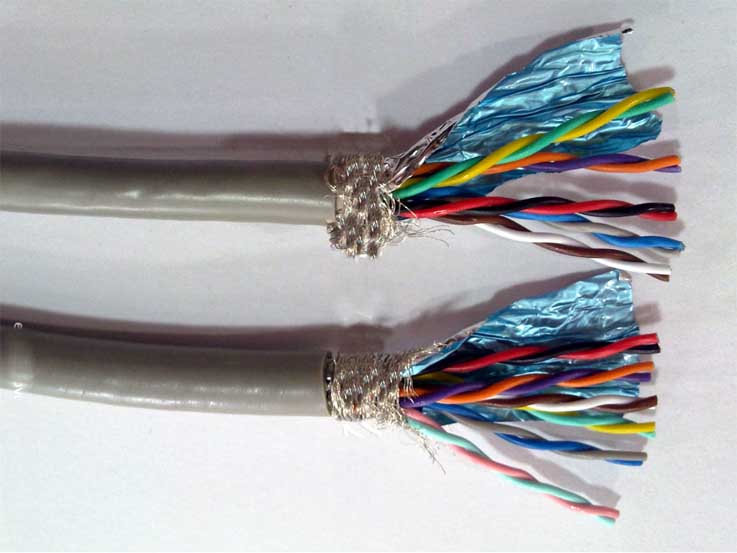
China High Flexible Shielded Encoder Twisted Pair Cable
There are many systems that use twisted pairs in automobiles, such as electronic injection systems, audio and video entertainment systems, airbag systems, CAN networks, ฯลฯ. Twisted pairs are divided into shielded twisted pairs and unshielded twisted pairs. The shielded twisted pair cable has a metal shielding layer between the twisted pair cable and the outer insulating envelope. The shielding layer can reduce radiation, prevent information leakage, and also prevent external electromagnetic interference. Using shielded twisted pair cable has a higher transmission rate than similar unshielded twisted pair cable.
Shielded twisted pair wires, wire harnesses are generally used directly with finished shielded wires. For unshielded twisted pairs, manufacturers with processing capabilities generally use a twisting machine for twisting. During the processing or use of twisted wires, two important parameters that need special attention are the twisting distance and the untwisting distance.
Twisted pair length
The twist length of a twisted pair refers to the distance between two adjacent wave crests or troughs on the same conductor (it can also be seen as the spacing between two twists in the same direction). ดูรูปภาพ 1, lay length = S1 = S2 = S3.
รูป 1, twist length S of twisted pair
The lay length directly affects the signal transmission capability. Different lay lengths have different anti-interference capabilities for signals of different wavelengths. อย่างไรก็ตาม, except for the CAN bus, relevant international and domestic standards do not clearly stipulate the twist length of twisted pairs. In GB/T 36048 Passenger Car CAN Bus Physical Layer Technical Requirements, the CAN wire twist size range is 25±5mm (33-50 twists/meter). It is the same as the CAN lay length specified in SAE J2284 250kbps high-speed CAN for vehicles.
โดยทั่วไป, each car company has its own twisting distance setting standards, or follows the requirements of each subsystem for the twisting distance of twisted wires. ตัวอย่างเช่น, Foton Motor uses a winch length of 15-20mm; some European OEMs recommend selecting the winch length according to the following standards:
1. CAN bus 20±2mm
2. Signal cable, audio cable 25±3mm
3. Drive line 40±4mm
พูดโดยทั่วไป, the smaller the twist pitch, the better the anti-interference ability of the magnetic field. อย่างไรก็ตาม, it is necessary to consider the diameter of the wire and the bendable range of the outer sheath material, and determine the most appropriate twisting distance based on the transmission distance and signal wavelength. When multiple twisted pairs are laid together, it is best to use twisted pairs with different lay lengths for different signal lines to reduce interference caused by mutual inductance. The damage to the wire insulation caused by too tight a twist length can be seen in the figure below:
รูป 2, Wire deformation or cracking caused by too tight lay length
นอกจากนี้, the twist length of twisted pairs should be kept even. The twisting pitch error of a twisted pair will directly affect its anti-interference level, and the randomness of the twisting pitch error will cause uncertainty in the prediction of twisted pair crosstalk. Twisted-pair production equipment parameters The angular speed of the rotating shaft is a key factor affecting the size of the inductive coupling of twisted-pair lines. It must be considered during the production process of twisted pair cables to ensure the anti-interference ability of twisted pair cables.
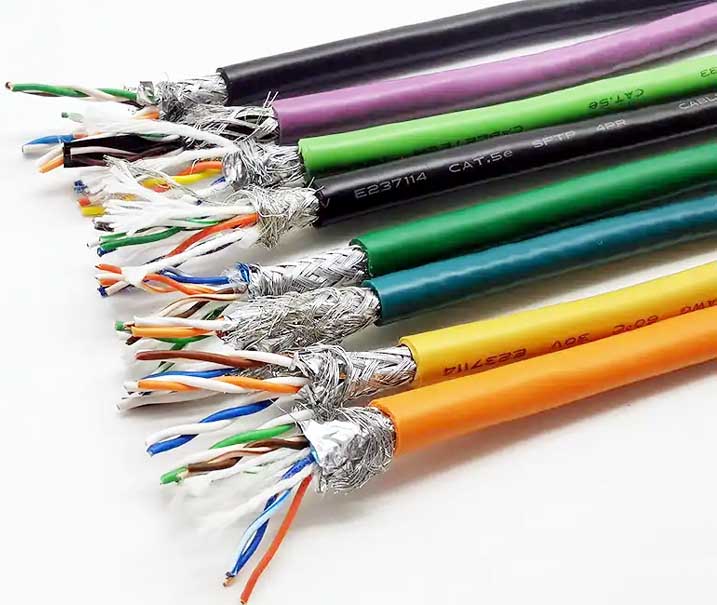
สายเคเบิลแปดคอร์อีเทอร์เน็ตแบบมีฉนวนหุ้มทองแดง Cat5e สองชั้นผ่านความบังเอิญ
Untwisting distance of twisted pair
The untwisting distance refers to the size of the untwisted part of the twisted pair end conductors that need to be split when installed into the sheath. ดูรูปภาพ 3.
รูป 3, Untwisting distance L of twisted pair
The untwisting distance is not specified in international standards. The domestic industry standard QC/T29106-2014 “Technical Conditions for Automotive Wire Harnesses” stipulates that the twisting distance should not be greater than 80mm. ดูรูปภาพ 4. The American standard SAE 1939 stipulates that the twisted pair of CAN lines should not exceed 50mm in untwisted size. ดังนั้น, the domestic industry standard regulations are not applicable to CAN lines because they are larger in size. Currently, various car companies or wiring harness manufacturers limit the untwisting distance of high-speed CAN lines to 50mm or 40mm to ensure the stability of the CAN signal. ตัวอย่างเช่น, Delphi’s CAN bus requires an untwisting distance of less than 40mm.
รูป 4, Untwisting distance specified in QC/T 29106
นอกจากนี้, during the wire harness processing process, in order to prevent the twisted wires from loosening and causing a larger untwisting distance, the untwisted areas of the twisted wires should be covered with glue. The American standard SAE 1939 stipulates that in order to maintain the twisted state of the conductors, heat shrink tubing needs to be installed at the untwisted area. Domestic industry standard QC/T 29106 stipulates the use of tape encapsulation.
Summarize
As a signal transmission carrier, twisted pair cables need to ensure the accuracy and stability of signal transmission, and they should have good anti-interference capabilities. The twist pitch size, twist pitch uniformity and untwisting distance of the twisted wire have an important impact on its anti-interference ability, so it needs to be paid attention to during the design and processing process.