 English
 العربية
 bosanski jezik
 Български
 Català
 粤语
 中文(漢字)
 Hrvatski
 Čeština
 Dansk
 Nederlands
 Eesti keel
 Suomi
 Français
 Deutsch
 Ελληνικά
 עברית
 Magyar
 Italiano
 日本語
 한국어
 Latviešu valoda
 Bahasa Melayu
 Norsk
 پارسی
 Polski
 Português
 Română
 Русский
 Cрпски језик
 Slovenčina
 Slovenščina
 Español
 Svenska
 தமிழ்
 ภาษาไทย
 Tiếng Việt


Key points of terminal harness assembly station design
Based on current technical specifications and industry practices, the design of terminal harness assembly stations needs to integrate factors such as structural adaptability, operational efficiency, safety and quality controllability. The following are key design directions and implementation suggestions:
1. Station structure design
Modular assembly unit
The station should be divided into independent modules such as terminal crimping, harness binding, sensor connection, 등., supporting parallel operations to improve efficiency.
Equipped with adjustable clamps and positioning devices to adapt to terminals of different packaging forms (such as epoxy resin, 금속 껍질, 등.).
Drawing and parameter integration
CAD 도면과 매개변수 주석 시스템을 통합하여 조립 단계와 주요 치수를 실시간으로 표시하여 운영 오류를 줄입니다..
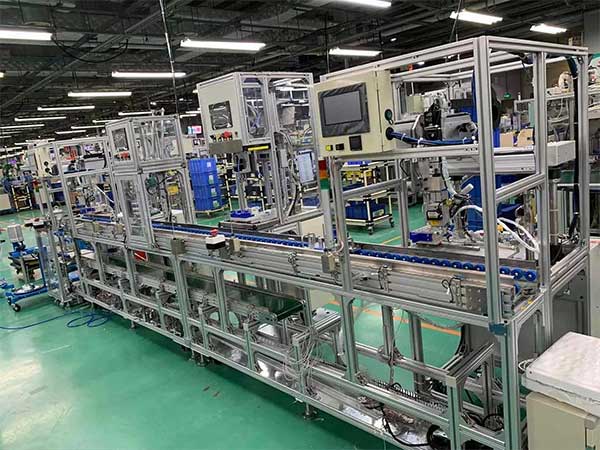
완전 자동화된 터미널 하니스 조립 스테이션 설계
2. 도구 및 장비 구성
특수공구 선정
압착 도구는 터미널 유형과 일치해야 합니다. (링 터미널과 같은, 총알 터미널) 균일한 압착력과 손상 방지를 보장합니다..
케이블 절연층 가공 품질을 보장하기 위해 고정밀 와이어 스트리퍼 및 열수축 튜브 가열 장비를 갖추고 있습니다..
자동화 장비 지원
스레딩을 보조하는 자동 와이어 공급 기계 또는 로봇을 도입하여 수동 작업 강도를 줄이고 일관성을 향상시킵니다..
3. 운영 프로세스 최적화
오류 방지 및 감지 메커니즘
컬러코딩을 통해, 극성 식별 및 광전 센서, 역배선이나 연결 누락을 방지하기 위해 오류 방지가 이루어집니다..
연속성 테스터 또는 멀티미터를 통합하여 하네스 저항 및 연결성을 실시간으로 감지합니다..
환경적응성 설계
워크스테이션에는 먼지 및 정전기 방지 기능이 있어야 합니다., 부식 방지 재료를 갖추고 있을 것 (불소수지 조리대 등) 의료 또는 산업 환경에 적응하기 위해.
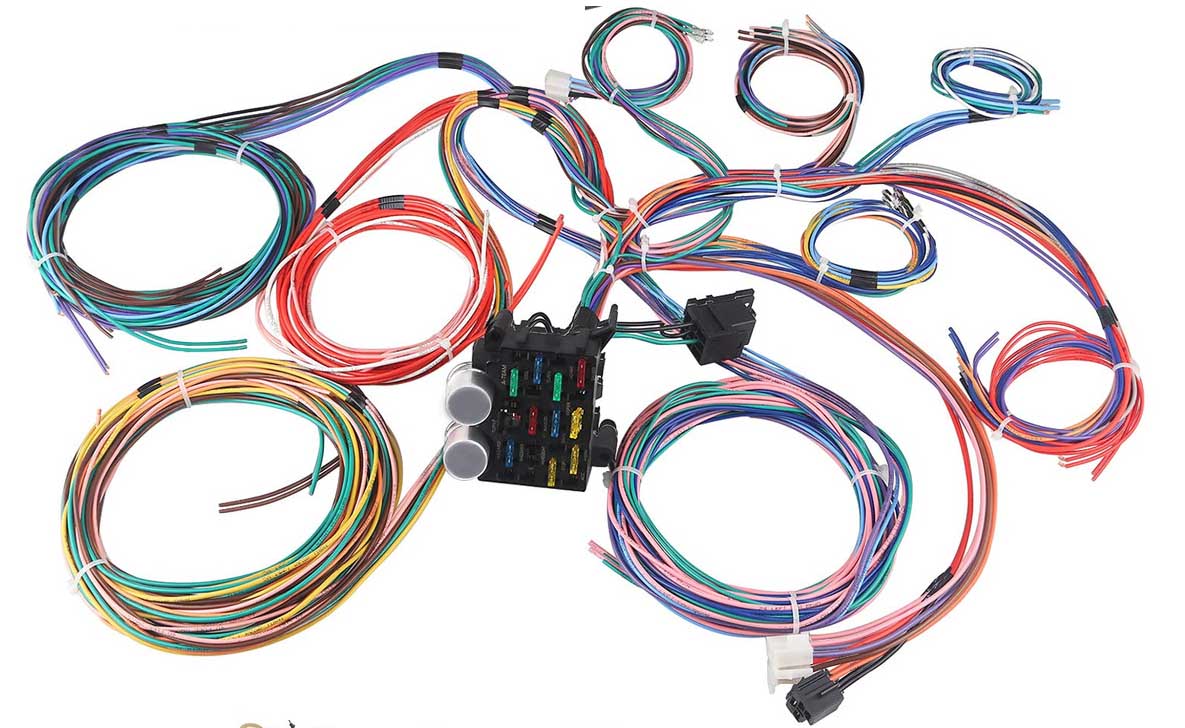
반란군 와이어 16 회로 12V 범용 배선 하네스 중국산
4. 품질 관리 및 추적성
교정 및 검증 링크
조립 후, 센서 성능은 표준 온도 소스 또는 시뮬레이션 환경을 통해 검증되어야 합니다. (NTC 저항 드리프트 ≤0.1%와 같은).
하네스의 각 배치에 대한 테스트 데이터를 기록합니다. (온도 반응 시간과 같은, 정확도 편차) to support quality traceability.
Ergonomic optimization
The workbench is height-adjustable and equipped with a magnifying glass or lighting equipment to reduce visual fatigue and improve operating comfort.
5. Adaptation of typical application scenarios
Wire harness assembly of medical equipment
It needs to meet the IP67 waterproof level, and use biocompatible materials to encapsulate the terminals to avoid the risk of human contact.
Energy storage system integration
In response to the temperature monitoring needs of the battery pack, a multi-channel wire harness layout is designed to support the rapid thermal management response of the BMS system.
Through the above design strategies, the terminal wire harness assembly station can achieve efficient and accurate large-scale production. 동시에, it meets the stringent requirements of medical, industrial and new energy fields for reliability and environmental adaptability.
In the wire harness manufacturing process, the size and output of the wire harness are the key to determining different types of assembly processes.
Regardless of the type of wire harness, a pre-assembly station is required, and some wire harnesses also include blind plugging stations. For simple pre-assembly of the circuit, there is no need to make a pre-assembly board, just hold it in your hand for work. Pre-assembled complex plates can be produced to facilitate operation and self-inspection. This requires a detailed pre-installed work instruction so that employees can clearly understand the work content. Usually a pre-assembly instruction book should reflect the following contents:
① Position of the instruction book
② Wire number, 색상, 와이어 직경, hole position
③ Shell number, hole location and simple schematic diagram
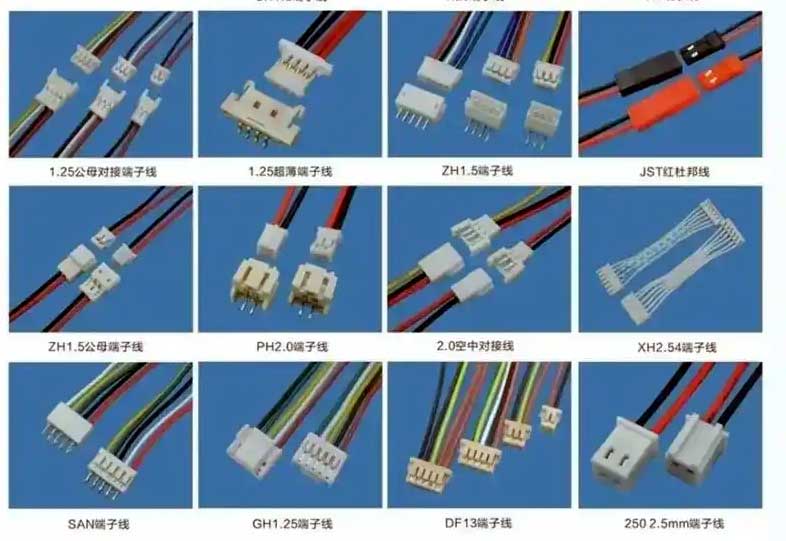
The Difference Between a Cable Assembly and Terminal Wire Harness
Process control points, 즉, key points or precautions (including rubber parts, 센서, diodes, locking, 등.)
⑤ If encapsulation is required, the type and length of the tape should be reflected
⑥ Blind plug number and hole location
⑦ Auxiliary tool number
The instruction book uses the simplest and easiest-to-understand expression (such as visualization) so that employees can work quickly and less easily make mistakes. Before inserting the terminal, employees should check the terminal blade and appearance, and follow the principle of “one push, two listens, and three pulls”. When a “click” is heard, 이는 터미널이 제자리에 삽입되었음을 의미합니다.. 하우징의 사전 조립된 부분이 완전히 삽입된 경우, 자물쇠, 덮개나 케이블 타이를 설치해야 합니다.. 조립된 하우징이 전선을 뒤로 당기므로 전선이 빠지지 않아야 합니다.. 각 작업장은 완료 후 자체 점검을 실시해야 합니다..
사전 설치된 와이어와 재료가 많이 있습니다., 유형이 비교적 복잡합니다.. 배치는 특정 논리적 구성을 따라야 하며 운영자를 방해하지 않아야 합니다.. 부품 배치는 작업 지침의 작업 순서와 일치해야 합니다., 왼쪽에서 오른쪽으로, 위에서 아래로. 동일한 스테이션에서 동일한 색상과 직경을 갖는 도체는 인접하지 않아야 하며 최대한 멀리 떨어져 있어야 합니다.. 각 부분에 라벨을 붙여야 합니다., 사진 보여주기, 부품 번호, 한정 수량 및 기타 정보. 적어도 있어야합니다 2 재공급 시 정상적인 운영에 영향을 미치지 않도록 자재 상자, 빈 자재 상자를 비울 수 있는 장소가 있어야 합니다.. 특수 전선에는 특수 표시가 제공되어야 합니다. (금도금이나 에어백과 같은) 직원들에게 경고하기 위해. 마지막으로, 사전 조립된 분기가 완료된 후, 다음 스테이션 또는 최종 조립의 다음 단계를 용이하게 하기 위해 행잉 폴이나 트랜스퍼 트롤리에 원형으로 배치되어야 합니다..
넓은 관점에서, 최종 조립 공정은 크게 세 가지 유형으로 나눌 수 있습니다: 고정판, 전통적인 조립 라인과 "H"자형 조립 라인, 그리고 특별한 것은 플립 플레이트입니다.
회로 수가 적고 조작이 쉬운 와이어 하니스용 (자동차 조명 전선과 같은, 트렁크 전선, 등.), 고정판을 사용할 수 있습니다.. 주문량에 따라 보드 수를 늘리거나 줄일 수 있습니다., 더 유연하고 편리합니다.. 회로수가 늘어나면, 단일 보드가 출력 및 생산 효율성을 충족할 수 없는 경우 (엔진과 같은, 계기판 라인, 등.), 동적 조립 라인과 같은 고전적인 생산 방법, 4-역, 8개 스테이션이 선택되었습니다.. 하지만 이는 보드 높이에 국한됩니다., 두 명의 작업자가 하나의 워크스테이션에서 동시에 병렬 작업을 수행하는 것은 허용되지 않습니다.. 이 문제를 해결하려면, H자 모양의 조립 라인이 만들어졌습니다.. 이는 복잡한 회로와 다양한 유형의 자동차 모델이 있는 와이어링 하니스에 특히 적합합니다. (바디라인과 같은, 인테리어 캐빈, 등.). 가장 큰 단점은 회전 속도가 너무 빨라서는 안된다는 것입니다., 직원들이 멀미를 하고, 장시간 고개를 숙인 채 일을 하다 보면 피곤해지기 때문에.
전체 와이어 하니스 어셈블리를 통해 사전 조립 및 최종 조립이 진행됩니다.. 생산 방법과 구분 정의도 특히 중요합니다., 또한 프로세스 엔지니어의 수준을 보여줍니다.. 끊임없는 탐구와 지속적인 개선이 필요한 끝없는 길입니다.. 모두가 더욱 더 멀리 갈 수 있기를 바랍니다..