 English
 العربية
 bosanski jezik
 Български
 Català
 粤语
粤语 中文(漢字)
 Hrvatski
 Čeština
 Dansk
Dansk Nederlands
 Eesti keel
 Suomi
Suomi Français
 Deutsch
 Ελληνικά
 עברית
עברית Magyar
 Italiano
 日本語
日本語 한국어
한국어 Latviešu valoda
 Bahasa Melayu
 Norsk
Norsk پارسی
پارسی Polski
 Português
 Română
 Русский
 Cрпски језик
 Slovenčina
 Slovenščina
 Español
 Svenska
 தமிழ்
தமிழ் ภาษาไทย
 Tiếng Việt

Bộ dây điện ô tô là một bộ phận quan trọng của ô tô hiện đại và là phần chính của mạng lưới mạch ô tô. Dẫn dòng điện đến các bộ phận điện khác nhau trên ô tô đóng vai trò quan trọng trong việc thực hiện ý định của những người trên ô tô. Sử dụng cơ thể con người làm đại diện, động cơ tương đương với trái tim con người, và dây nịt giống như mạch máu hoặc hệ thần kinh của cơ thể con người.
Trong số các vấn đề hư hỏng ô tô khác nhau, những tác động bất lợi do dây nịt gây ra chiếm một tỷ lệ đáng kể. Nếu các dây, cao su, ống mềm, vân vân. trong dây điện bị hỏng, gây đoản mạch hoặc hở mạch trên dây, nó sẽ làm hỏng chức năng truyền tải. Điều này sẽ không chỉ khiến các thiết bị khác nhau ngừng di chuyển, nhưng tùy theo mức độ, nó cũng có thể gây ra khói, ngọn lửa, không có khả năng đi lại, xoay, phanh và các vấn đề lớn khác.
Vì dây điện chiếm một vị trí quan trọng như vậy trong toàn bộ ô tô, làm quản lý chất lượng tại nhà máy sản xuất ô tô, cần tập trung kiểm soát, quản lý chặt chẽ các vấn đề về chất lượng của dây dẫn điện. Để khách hàng có thể yên tâm và thoải mái khi lái xe, chất lượng của bộ dây điện phải được xác minh thông qua cách tiếp cận có hệ thống và chuyên nghiệp. Phương pháp này là chứng chỉ khai thác dây, còn được gọi là kiểm tra W.P.T. Quan điểm này cũng là quan điểm của việc xác minh khai thác dây.
Bài viết này thảo luận về các quan điểm kiểm tra của công việc kiểm tra dây nịt cần được áp dụng với tư cách là người quản lý chất lượng trong quá trình kiểm tra dây nịt.
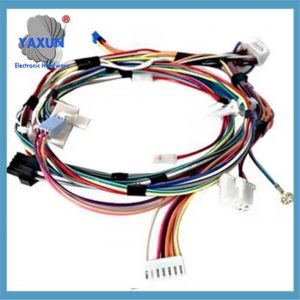 Cách Điện Nhà Ga Bộ Thiết Bị Đầu Cuối Uốn Dây Cáp Cho Xe Hệ Thống Điều Khiển Điện Tử Chẩn Đoán Kiểm Tra Kết Nối Cảm Biến ECU |
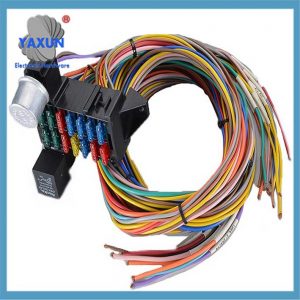 Bộ khai thác dây cáp phẳng chất lượng cao OEM / ODM để điều khiển hệ thống – Công nghệ cao |
 Cáp điện cao áp 800VDC màu cam Dòng điện thấp 40A 3POs 4POs 5POs Đầu nối EV HVIL chống nước cho xe |
1 – Tổng quan về chứng nhận khai thác dây
Kiểm tra khai thác dây điện được gọi là kiểm tra W.P.T. W.P.T là viết tắt của WIRE., ĐƯỜNG ỐNG, và ỐNG. Thường đề cập đến các bộ phận như dây nịt, cáp, ống và ống cao su. Kiểm tra xem có hư hỏng gì không là kiểm tra W.ET.
Trong giai đoạn phát triển và sản xuất thử nghiệm các mẫu xe mới của Dongfeng Honda, nhân viên chất lượng nhà máy cần hoàn thành việc kiểm tra dây nịt ở các giai đoạn cụ thể. Và việc kiểm tra dây dẫn ở mỗi giai đoạn là khác nhau (Xem hình 1).
Nhân vật 1 Kiểm tra bó dây trong giai đoạn phát triển và sản xuất thử nghiệm các mẫu xe mới của Dongfeng Honda
Mặc dù nội dung và hình thức kiểm tra bộ dây ở mỗi giai đoạn có khác nhau, quan điểm kiểm tra dựa trên mỗi lần kiểm tra dây nịt là như nhau. Với những quan điểm này, vấn đề có thể được phát hiện và giải quyết một cách hiệu quả, từ đó nâng cao chất lượng và ngăn ngừa sản phẩm lỗi được chuyển sang quy trình tiếp theo.
2 – Phối cảnh xác minh khai thác dây
Các vấn đề về dây nịt thường gặp bao gồm: sự can thiệp, cắn, CL không đủ, khó khăn cài đặt, lỗi cài đặt, sự lắp ráp sai, kéo, kéo dài, vân vân. Để đáp lại những vấn đề này, nhân viên kiểm tra dây nịt sẽ sử dụng các quan điểm tương ứng để tìm và giải quyết vấn đề.
Để thuận tiện cho việc giải thích, các vấn đề phát sinh trong các cuộc kiểm tra dây nịt khác nhau được phân loại dưới đây để thảo luận về các khía cạnh cần tuân thủ trong quá trình kiểm tra dây nịt.
2.1 Sự can thiệp
Sau khi lắp ráp hoàn chỉnh một chiếc xe, nếu các cạnh sắc của bộ dây tiếp xúc với các bộ phận ngoại vi của bộ dây (tấm kim loại, tấm trang trí, bộ phận chức năng, vân vân.) và có sự tương tác lực, nó có nghĩa là dây nối và vật thể gây nhiễu lẫn nhau. Sự cố nhiễu là vấn đề dễ xảy ra và phổ biến nhất trong quá trình xác minh dây nịt (Xem hình 2).
Nhân vật 2 Sự can thiệp của dây nịt phổ biến
Xem xét khả năng nhiễu giữa bộ dây và hộp điều khiển màu xanh, bạn có thể tính CLIP1, Điểm CLIP2 ~ độ dài của Upoint b. Nếu tổng nhỏ hơn chiều dài của dây nịt ở dung sai MAX, nhiễu sẽ xảy ra. Nếu chiều dài lớn hơn dung sai MAX của bộ dây, nhiễu sẽ không xảy ra.
Qua tính toán, khoảng cách từ CLIP1 đến điểm b: l01mm
Khoảng cách từ CLIP2 tới điểm b: 200.5 mm
Khi chiều dài đường trục lên tới 305 m, 305>101+200.5, sẽ xảy ra hiện tượng nhiễu giữa bộ dây và hộp điều khiển.
Bằng cách mở rộng, nếu ba giá trị dữ liệu của A, B, và D thay đổi (C=A+B), việc xác định nhiễu của dây điện sẽ thay đổi như thế nào? Determining whether the wire harness interferes with the control box can be calculated by calculating the distance between the two closest fixed points of the possible interference part of the wire harness and the possible interference points of the component. In the early stage, when there is only a wiring harness but no completed car, you can use this to find possible areas of interference as key locations.
2.2 Cut
Wire harness cutting is the most obvious manifestation of interference between the wire harness and surrounding components, and it more directly reflects the consequences of wire harness interference. Cutting the wire harness will cause the broken copper wires of the wires to be exposed or the wires to be cut, causing a short circuit or open circuit. Its external manifestation is that the relevant functions do not operate, and in more serious cases, the car may burn.
In the entire vehicle, due to the spatial structure, the routing design of the wiring harness inevitably passes through some compact areas. A perfect hands-off layout is impossible to achieve in an actual finished car. Tại thời điểm này, it is necessary to consider whether there may be a hidden danger of cutting the wire harness in the area where the wire harness must be in contact with surrounding components. So in wire harness inspection, how to determine the risk of cutting at the interference part, there are the following factors to consider.
2.2.1 Protection form of wire harness
The wiring harness has the following forms of protective exterior: TwiStTube, Corr Tube, PVC Tube, PVC Tape, Urethane Foam, CushionTape.
Each type of exterior has different models, but the basic physical and chemical properties of the same exterior among different models are roughly the same. Appropriate protective outer covering can be selected for the wiring harness according to its characteristics.
As far as the hidden danger of wire harness cutting is concerned, mainly based on the wear-resistant strength of the exterior, the above exteriors can be simply sorted. From strong to weak: Twist Tube>CorrTube>CUSHION Tape>PVC Tube>URETHANE FOAM>PVC Tape.
2.2.2 Drawing properties of wire harness
Refer to the 2D drawing to determine the line length, exterior decoration and model between the two fixed points of the interference part. Considering the tolerance of the wire length, what is the degree of wire harness interference in the extreme MAx or MIN state? What kind of wire harness exterior is used, what is the model, and whether it has the protective effect in the current environment: Sometimes corrugated pipe (Corr Tube) is not wrapped with PVC tape around the outside. If the type of corrugated pipe used is inappropriate, the wires may jump out of the opening of the corrugated pipe. Trong trường hợp này, you need to pay attention to the possibility of interference from the surrounding area.
2.2.3 Material of contact parts
If there is relative movement and friction between the contact parts, it may cause the wire harness to be cut. By default, sheet metal sharp edges cannot interfere with wire harnesses that are not wrapped with corrugated tubes (CorrTube) or Twist Tubes (Twist Tube). There are welding spots in the sheet metal welding parts. If there are long burrs at the solder joints and the wire harness is close to the burrs, the burrs may penetrate deep into the wire harness and pierce the wires, causing the wire harness to be cut.
2.2.4 Contact part shape
The wire harness protected by the corrugated tube comes into contact with the sharp edge of the sheet metal. Although it is protected by the corrugated tube, if the relative positions of the corrugated tube and the sharp edge are perpendicular to each other, the wire harness may be cut.
2.3 Occlusion
The occurrence of the bite phenomenon is basically due to the fact that the wiring harness direction (may be the design direction, or may be the direction fluctuation caused by tolerance fluctuation) is exactly located at the assembly position of the surrounding components. As a result, the wiring harness is squeezed between the two mating parts.
During the wire harness inspection process, it is sometimes found that the wire harness is stuck between parts. Sometimes it may be because the wire harness naturally sag due to gravity, and sometimes it may be due to tolerance fluctuations where the wire harness is too long or too short, causing bites.
The wiring harness mainly consists of wires and their protective outer coverings. Wiring harness inspection is to ensure that the wires in the wiring harness are not damaged by external forces and affect their functions. Vì thế, slight deformation of the protective exterior can be accepted by quality personnel as long as it does not cause damage to the wires. In other words, as long as the degree of bite does not affect the wires in the wiring harness, it can be considered that there is no problem with the wiring harness here.
3-Phần kết luận
As an important part of electrical installation work, wire harness inspection requires quality management personnel to continuously improve their professional knowledge and accumulate experience based on the inspection results of various models. I hope that the above views on wire harness inspection can serve as inspiration and form a complete and mature view on wire harness inspection.
Trong tương lai, if the entire vehicle wiring harness can be evaluated from the perspective of the designer, quality manager, and assembler combined with the designer’s design perspective, then the wiring harness verification work can be advanced more comprehensively. It also ensures that customers get the most comfortable user experience.