 English
 العربية
 bosanski jezik
 Български
 Català
 粤语
 中文(漢字)
 Hrvatski
 Čeština
 Dansk
 Nederlands
 Eesti keel
 Suomi
 Français
 Deutsch
 Ελληνικά
 עברית
 Magyar
 Italiano
 日本語
 한국어
 Latviešu valoda
 Bahasa Melayu
 Norsk
 پارسی
 Polski
 Português
 Română
 Русский
 Cрпски језик
 Slovenčina
 Slovenščina
 Español
 Svenska
 தமிழ்
 ภาษาไทย
 Tiếng Việt

ניתוח של טכנולוגיית ריתוך קולי עבור חוטי חיבור לרכב חשמלי
אֲנִי. יתרונות תהליכים
יעילות ואמינות גבוהות
ריתוך אולטראסוני משיג קשר במצב מוצק בין אטומי מתכת באמצעות חום חיכוך הנוצר על ידי רטט בתדר גבוה. אין צורך בהלחמה או שטף. למפרק הריתוך התנגדות נמוכה ומוליכות מעולה, מה שיכול להפחית משמעותית אובדן אנרגיה וסיכוני חימום. הוא מתאים לרתמות חיווט ומערכות מחברים במתח גבוה.
בהשוואה לתהליכי כיווץ או הלחמה מסורתיים, זמן הריתוך שלו קצר (רק כמה שניות), וחוזק המפרק גבוה, אשר יכול לעמוד בפני רעידות ולחץ מכני במהלך נסיעה ברכב.

פסים שונים בהתאמה אישית - קשיחים, גָמִישׁ
יכולת הסתגלות רחבה לחומר
טכנולוגיה זו יכולה להתמודד עם מגוון חומרים כגון נחושת, אלומיניום וסגסוגותיו. הוא מתאים במיוחד לצרכי הריתוך של רתמות חיווט רב-גדילים בקוטר דק ופסי אוטובוס שטוחים (כגון מוטות נחושת/אלומיניום) ברכבי אנרגיה חדשים, עונה על הדרישות של קל משקל ואופטימיזציה של שטח.
הגנה על הסביבה וחיסכון באנרגיה
מאפייני צריכת האנרגיה הנמוכה מפחיתים את עלויות הייצור, תוך הימנעות מבעיות קורוזיה הנגרמות משאריות שטף, ושיפור האמינות ארוכת הטווח של רתמות החיווט.
2. תרחישי יישום אופייניים
חיבור רתמת חוט במתח גבוה
משמש לריתוך כבלים במתח גבוה בין ערכות סוללות ומנועי הנעה כדי לעמוד בדרישות ההולכה של זרמים גדולים (כגון רתמות תיל עם שטח חתך של ≥50 מ"מ) ולהבטיח התנגדות פנימית נמוכה וחוזק מכני גבוה.
פס גמיש מותאם אישית
שילוב מערכות אוטובוס
בתוך ערכת הסוללות, ריתוך קולי מחבר מספר פסים שטוחים (בדרך כלל נחושת או אלומיניום) אל קטבי הסוללה, הפחתת תפוסת המקום ושיפור יעילות ההפצה הנוכחית.
רכיבי מערכת טעינה
מיושם על רכיבים מרכזיים כגון ממשקי טעינה מהירה ואקדחי טעינה מקוררים בנוזל כדי להבטיח את היציבות והעמידות של המגעים במהלך טעינה בעוצמה גבוהה.
3. אתגרים ופתרונות טכניים
קושי בריתוך רתמות תיל מרובעות גדולות
רתמות תיל עם שטח חתך של יותר מ-50 מ"מ דורשות ציוד בעל הספק גבוה יותר (כגון ≥10kW), ולחץ הריתוך המוגבר יגרום לעיוות של ציוד שלוחה מסורתי, דורש תכנון מבני קשיח יותר כדי לשפר את יעילות המרת האנרגיה.
ריתוך אולטרסאונד של פסים ביישומי רכב חשמלי
ניטור איכות הריתוך
תהליך הריתוך צריך לפקח על פרמטרים כגון אנרגיה, מִשׂרַעַת, ולחץ בזמן אמת, ולנתח את עקומת הריתוך באמצעות מערכת הזיהוי המקוונת של רטט כדי למנוע בעיות ריתוך קר או הלחמה. לְדוּגמָה, פתרון הניטור שפותח על ידי Jiaocheng Ultrasonic יכול לעקוב דינמי אחר מצב הריתוך ולשפר את קצב התפוקה.
Iv. מגמת פיתוח
שדרוג חכם: בשילוב עם אלגוריתם AI כדי לייעל את ההתאמה האדפטיבית של פרמטרי ריתוך כדי לענות על צורכי הריתוך של רתמות חיווט חדשות כגון מוליכים מרוכבים נחושת-אלומיניום וחומרי ציפוי8.
מחקר ופיתוח של ציוד בעל הספק גבוה: לפתח ציוד מיוחד עם הספק ולחץ גבוהים יותר לצרכי הריתוך של רתמות חיווט גדולות יותר בחתך רוחב (כגון 150 מ"מ) בתרחישי טעינה.
תַקצִיר
ריתוך אולטראסוני הפך לתהליך הליבה לחיבור רתמות חוטי מתח גבוה ופסי אוטובוס של רכבים חשמליים עם היעילות הגבוהה שלו, צריכה נמוכה, ואמינות גבוהה. עם הגדלת קיבולת הסוללה ופיתוח טכנולוגיית הטעינה המהירה, הטכנולוגיה הזו צריכה לפרוץ עוד יותר את צוואר הבקבוק של ריתוך רתמות חיווט גדולות ולהבטיח בטיחות באמצעות ניטור איכות חכם.
פסים גמישים ופסים מוצקים מרותכים לפסים מוצקים
תעשיית ייצור רתמות חיווט לרכב הייתה המשתמשת הגדולה ביותר בריתוך קולי מאז סוף שנות ה-80, בעיקר באמצעות הטכנולוגיה לחבור תיל. אוּלָם, יישומים חדשים של הטכנולוגיה נמצאים בשימוש כחלק מתהליכים עתידיים שיספקו בסופו של דבר ליצרניות הרכב פתרונות לרבים מהחסרונות של טכנולוגיית הרכב החשמלי של ימינו. מאמר זה מציג בעיקר את הריתוך האולטראסוני של פסי פסים ופסים של רתמות חיווט לרכב.
1. נוף ייצור רכב חשמלי נוכחי
בכלי רכב חשמליים, ערכות סוללות גדולות המשולבות באריזות אטומות משמשות להשגת מתח ההפעלה והזרם הנדרשים להפעלת המנוע החשמלי של הרכב. כַּיוֹם, שני הנושאים העיקריים בתחום EV/HEV הם אחסון אנרגיה וטווח נסיעה. יצרני OEM מטפלים בבעיות אלה בשתי דרכים: ייצור סוללות גדולות יותר לטווח גדול יותר, ויצירת סוללות חזקות יותר לטעינה מהירה יותר. לשתי הגישות יש אתגרים. כֵּן, סוללות יכולות להיות גדולות יותר, אבל הם יכולים להגיע רק לגודל מסוים לפני שהם הופכים יקרים וכבדים מכדי להיות פתרון בר-קיימא.
חיווט מסורתי הוא בדרך כלל לא המקום הראשון בו אנשים מחפשים חדשנות EV, אבל ההתקדמות האחרונה משפיעה מאוד על סיפור ה-EV. מכיוון שהם נותנים ליצרני OEM שני דברים שהם זקוקים להם נואשות בארכיטקטורת EV: פחות מסה ויותר מקום. אחת הדרכים לפנות מקום ולהפחית מסה היא לעבור מחיווט מעגלי למנצחים שטוחים. בשביל זה נועד הפס.
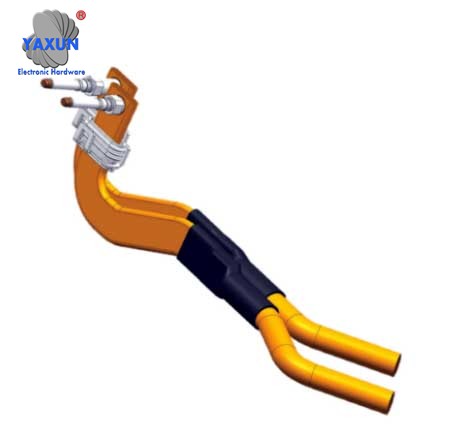
כבלים מרותכים בשני הקצוות של פס מוצק
2. מהו פס חשמלי?
נגזר מהמילה הלטינית "אומניבוס," שמתורגם כ"הכל" (כמו ב"כל הזרמים במערכת נתונה"), פסים הם מוליכים שטוחים שהופכים לחלק מארכיטקטורת הרכב החשמלי. Busbars are usually installed in switchgear, switchboards and busway enclosures for localized high current distribution. They are also used to connect high-voltage equipment in electrical switchyards and low-voltage equipment in battery banks. Busbars are metal bars or rods made of copper, brass, or aluminum that are used for grounding and conducting electricity. Electrical busbars can be coated with various materials, such as copper, to provide different conductivity limits and variations. Busbars come in many shapes and sizes, and these shapes and sizes will determine the maximum amount of current the conductor can carry before deteriorating.
הַיוֹם, there are up to 20+ busbars in a battery pack, and this number will increase as battery packs get larger and/or more powerful, בעוד שהחלל בתוך ערכת הסוללות נשאר צר מאוד. ריתוך אולטראסוני הוא תהליך החיבור המועדף עבור פסים ביישומי רכב חשמלי. אבל מכיוון שהסוללות החזקות יותר הללו מסוגלות רק לטעינה מהירה, ייתכן שבקרוב נראה יותר חדשנות במסילות מעבר למארזי סוללות. העברת הספק גבוה מכניסת הטעינה לסוללה והלאה למנועים וציוד בעלי הספק גבוה אחרים מגבירה את הצורך ביישומי ריתוך קולי חדשניים.
3. מדוע חברות מעדיפות פסי אוטובוס?
בטווח הארוך, נהוג לחשוב שייתכן שיעדיפו פסי אוטובוס על פני כבלים סטנדרטיים עבור רתמות חיווט מסוימות בתעשיית הרכב. הפופולריות הגוברת של כלי רכב חשמליים, עלות-תועלת, קלות ההתקנה, עלויות תחזוקה ושירות נמוכות של סורגים לרכב, ופיתוח תשתית טעינת רכב חשמלי הם חלק מגורמי המפתח המניעים את הגידול בביקוש לברים לרכב.. יֶתֶר עַל כֵּן, התפתחויות טכנולוגיות בייצור ותשתיות הטעינה של רכבים חשמליים צפויים להועיל לשוק פסי הרכב העולמי. לפי מחקר שוק, בשל גורמים אלו, השוק צפוי לייצר יותר מ $170 מיליון בהכנסות ב 2030, גדל ב-CAGR של 24.6% מִן 2021-2030.
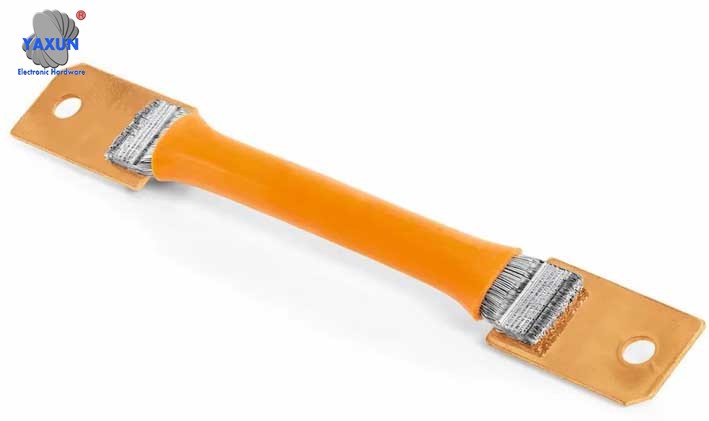
פסים מוצקים מרותכים לכבלים
יתרונות השימוש בפסים:
• להפחית את עלויות המתקן ולהאיץ את ההתקנה
• יכולת הוספה, הסר או העבר את ספקי הכוח בקלות ובמהירות ללא זמן השבתה
• עמיד לעתיד וגמיש מאוד שכן חלק מהפלאגינים ניתנים לניתוק ולחיבור מחדש ללא הפסקת חשמל
• אין צורך בתחזוקה שוטפת
• הרחבה או שיפוץ מהירים וזולים יותר
• ידידותית יותר לסביבה מכיוון שהיא בדרך כלל דורשת פחות חומרי התקנה ושקעי החיבור ניתנים לשימוש חוזר ומקומם בקלות
• מוליכים שטוחים תופסים פחות מקום והם 70% קצר יותר בגובה
• יכול לתמוך 15% יותר כוח מאשר כבלים עם אותו שטח חתך
• פחות משקל ושטח אריזה, גמישות טובה יותר. לְדוּגמָה, 160 mm² אלומיניום שטוח גמיש (FF-Al) כבלים הם פתרון חדשני ואלטרנטיבי ל 200 מ"מ כבלי אלומיניום עגולים.
• הידוק עם ברגים, התהליך האמין ביותר הקיים כיום ופחות יקר. אבל זה מוסיף חלקים נוספים (ברגים) ודורש ערכי מומנט ספציפיים
• פיזור חום יעיל - יעיל יותר מכבל תקוע
• קונסטרוקציות שונות – נחושת ואלומיניום, rigid or flexible, laminated. see picture 1
• Internal battery does not require electromagnetic compatibility
• Promote automation, improve safety and quality
דְמוּת 1 – Examples of various busbars – rigid, גָמִישׁ, custom designs
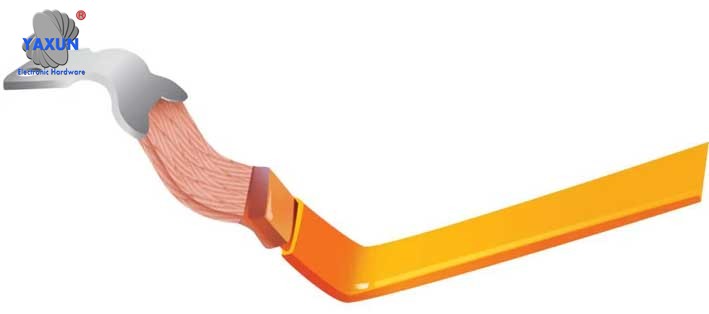
Solid busbars connected to flat braided wires
4. The importance of busbar material and size
Busbars are usually made of corrosion-resistant copper, brass or aluminum and housed in solid or hollow tubes. The shape and size of the bus bars, whether flat strips, solid rods or rods, allow for more efficient heat dissipation due to a high surface area to cross-sectional area ratio.
Although copper oxidizes over time, it remains conductive, but that usually means more power can push electricity along the surface. Although it does not completely prevent prolonged oxidation, it greatly reduces the effects. Coating the busbar surface will help prevent oxidation.
Busbar coatings typically serve three main purposes:
1. Inhibit corrosion
2. Improve electrical conductivity
3. For cosmetic purposes
Laminated busbars are used to avoid circulating currents in parallel switching devices in power electronic circuits. In addition to its important applications in electric vehicles, it also has extensive applications in solar and wind energy collection and distribution due to its low inductance properties. A more effective and cost-effective method is to use an insulating epoxy coating powder. Epoxy coating powders have extremely high dielectric strength and can be bonded directly to busbar copper, aluminum or silver plating layers.
The size of the busbar depends on its specific use. The most common commercial and industrial busbar sizes are 40–60 amps, 100 amps, 225 amps, 250 amps, 400 amps, וכן 800 amps.
Current sizes of busbars used in automotive applications are 35, 50 אוֹ 90 מ"מ.
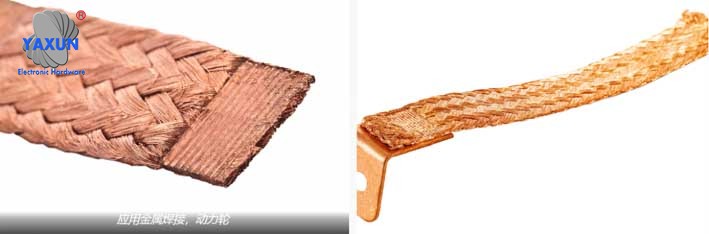
Flat braided cable solidified and welded by ultrasonic welding
Busbars are available in two materials: copper and aluminum. The main differences to consider when choosing materials are:
• tensile strength
• Current carrying capacity
• Resistance
• weight
• cost
Aluminum busbars are lower cost and work well in high humidity conditions. But aluminum has lower current capabilities and lower resistivity than copper. Copper has better thermal properties than aluminum.
Busbar manufacturers can review the minimum requirements for busbars for EV/HEV or other power distribution applications, detailing cost and material selection trade-offs with performance. כַּמוּבָן, for EV/HEV power distribution applications, driver safety is an additional concern. When selecting busbar materials, the highest possible reliability should be achieved, not only to meet vehicle warranty requirements, but also for driver and passenger safety.
Calculation of conductor sizes is particularly important for the electrical and mechanical performance of busbars. Current carrying requirements determine the minimum width and thickness of the conductor. Mechanical considerations include rigidity, mounting holes, קשרים, and other subsystem elements. The width of the conductor should be at least three times the thickness of the conductor. Adding lugs and mounting holes changes the cross-sectional area of the conductors, creating potential hot spots on the bus bars. The maximum current per slice or termination must be considered to avoid hot spots.
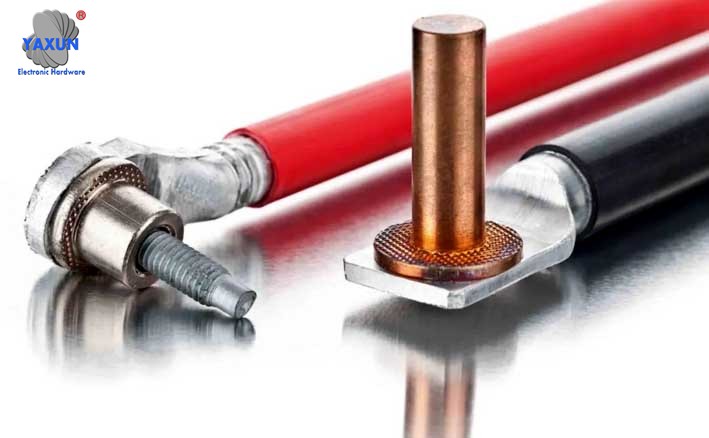
Busbars welded to LEONI connecting bolts
5. Solid and flexible busbars
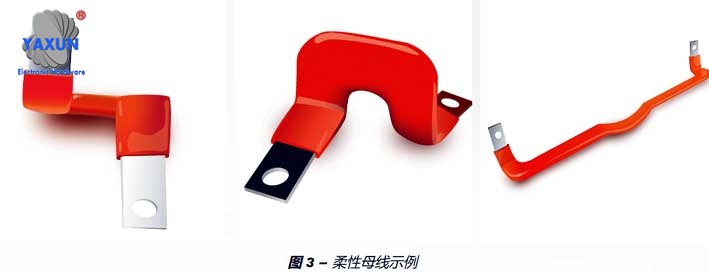
Another key difference that must be considered is solid busbars vs. flexible busbars. For automotive applications within EV batteries, solid busbars are used (ראה איור 2). Flexible busbars are used in short sections when a specific area needs to be moved for assembly or application. It serves as an electrical “jumper”. An example of a flexible busbar is shown in Figure 3.
Flexible busbars have several thin layers of copper or aluminum and are designed to efficiently distribute power in AC or DC systems. Solder the copper foil stack in the assembly area so that the ends are rigidly connected while the middle remains flexible. Examples of applications requiring flexible busbars include:
• Electric, hybrid and fuel cell vehicles
• Switchgear and transformers for the energy and offshore industries
• Application of generators in the shipbuilding industry
• Transformers and charging stations
• Switchgear and substations in railway applications, chemical plants and high voltage power distribution
• Generator power link
• Electrical connections in the switch cabinet
Application of automobile busbars in the future
Busbar innovation outside the battery pack will be a hot topic in the future, transmitting high power from the charging inlet to the battery and then to other high-power motors and equipment (ראה איור 4).
There is an increasing interest in busbars from all OEMs and Tier 1 suppliers, mainly for high voltage applications. הַיוֹם, battery packs have approximately 15-20 busbars. For the outside of the packaging, an automated masking process is required, which does not exist today. For now, the focus is on the battery pack.
As future innovations increase the utilization of battery pack external busbars, these new applications will create significant opportunities for ultrasonic welding to improve the overall quality of future connection designs in busbar structures. ריתוך אולטראסוני, specifically the twist welding technique, allows welding of larger sizes, gentle vibration, and the ability to join harder to reach areas. As the industry evolves, these capabilities will allow for further busbar implementation outside of EV battery packs. דְמוּת 5 provides several examples of how ultrasonic welding may be implemented in future electric vehicle applications.
Companies such as Tesla, BMW and Ford are pushing the use of busbars outside the battery pack. Recently, global technology company APTIV acquired Italian company Intercable for approximately $600 million, actively seeking to use busbars for high-power distribution outside the battery pack. ב.מ.וו, one of its top three customers, is showing strong signs of pursuing this new way of distributing electricity. A handful of other companies are developing shielded busbars in the United States and Europe.
7 Challenges faced by applications outside the battery pack:
1. The busbar outside the battery pack needs to be shielded, which is not currently available – the battery pack has a shell that is sealed and shielded from electromagnetic interference.
2. There is a problem when busbars need to be bent around – they may be too stiff or may be damaged in the corners of the bends
3. The bolting process requires additional parts and specific torque values. Busbars with bolt holes can be replaced for busbar applications other than battery packs
4. Due to corrosion, aluminum busbars require plated bolt holes
5. The terminals are connected to the solid busbar for easy automation
6. Automation has not yet been fully implemented due to shielding
7. Welds and assemblies may require new standards and verification
8 Current applications of bus bars in ultrasonic welding
Ultrasonic welding technology is a proven joining process that automakers are increasingly using for cable-to-terminal connections in electric vehicles, busbars, battery manufacturing and power electronics. Linear soldering is the more traditional and well-known technique used by all equipment manufacturers and is the standard process for splicing wires. אוּלָם, like many other joining processes, linear welding has size limitations, welding difficulties in smaller areas and in specific geometries, welding orientation issues, and vibration effects on peripheral components.
Telsonic Twist SONIQTWIST® and PowerWheel® technologies provide innovative solutions for electric vehicle connectivity applications that were previously impossible. These innovative technologies allow many connection designs related to busbar applications where linear welding would not be possible. There are already smaller busbar applications using ultrasonic welding for connections. Ultrasonic welding is the preferred joining process for many busbars, such as flexible flat busbars up to 160 מ"מ. In the future, there will be many new applications utilizing ultrasonic welding in the busbar implementation of wiring harnesses. Some of the existing uses of ultrasonic welding in busbar applications are described below.
9 Curing of flexible busbars
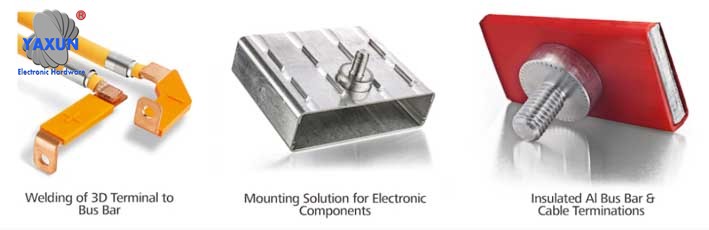
Flexible busbars require curing at the connecting portion in order to attach (attach) them to standard cables or connectors. במקרים מסוימים, the connection and solidification of cables or terminals can be accomplished in one step of soldering. Depending on the overall dimensions of the flexible busbar, ultrasonic metal welding can be a high-quality, economical solution. Using the twist welding process, material cross-sections up to 200 mm² can be welded. This welding technique prevents the joining material from hardening, which can lead to material brittleness and noticeable changes in material properties. בְּנוֹסַף, coagulation can be automated with Telsonic devices such as the TT7 PowerWheel®, as shown in the applications in Figures 6 וכן 7.
דְמוּת 6 – TT7-Tonic Power Wheel®
דְמוּת 7 – Welding solidified flexible busbars and solid busbars to solid busbars using TT7 Telsonic PowerWheel®
10 busbars welded to standard cable
In some applications, the bus bars are soldered to the orange cable, which will be soldered to the current connector. דְמוּת 8 shows an example of a short cable welded to stranded cable. Welding short cables at both ends can result in inconsistent weld quality because the first weld may become weaker due to vibrations caused by the second weld. USCAR-38 requires testing of cables less than 500 mm in length. Using torsion welding provides such gentle vibration that studies have shown that, depending on the terminal design, the impact on stranded cables and flexible busbars is much less (ראה איור 9). This allows for shorter cables and appropriate connectors to be soldered together.
דְמוּת 8 – Solid busbar welded to standard cable
דְמוּת 9 – Short cable (200 מ.מ.) soldered at both ends
11 Flat braided cable welds
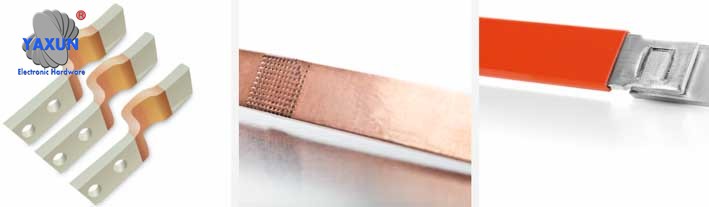
במקרים מסוימים, manufacturers use flat braided cables instead of orange cables. Flat braided cables are welded and automatically cut into parts with specific lengths and welds at both ends (ראה איור 10). Braided cables with welds on both ends are also called shunts. The advantage of using ultrasonic welding to manufacture the shunt is that minimal heat is required when manufacturing the shunt and welding the shunt to the busbar (ראה איור 11). This prevents brittle strands and scoring of unusually thin strands caused by the heat generated by resistance welding (another technique that can be used).
דְמוּת 10 – Solid busbars connected to flat braided jumpers
דְמוּת 11 – Flat braided cable cured and welded by ultrasonic welding
12- Torsion welding application capability of busbars
Flexible busbar foils are laminated/plated with materials such as copper to prevent oxidation issues. For solid busbars, the bolt hole connections must be plated. For aluminum solid busbars, the connecting contacts must be copper. לָכֵן, copper washers are used and connected to the bus bars by twist soldering (ראה איור 12). The proven SONIQTWIST® technology as well as the Telsonic TSP welding machine (תְאֵנָה. 13) can be used for this application.
דְמוּת 12 – Copper nut welded to Al busbar using Telsonic twist welder SONIQTWIST®
דְמוּת 13 – Telsonic SONIQTWIST® TSP
British car manufacturer Jaguar is currently utilizing the twist welding capabilities of SONIQTWIST® and PowerWheel® for power distribution busbar assemblies. The company used busbars instead of copper cables to significantly reduce the weight and cost of the F-TYPE sports car (ראה איור 14). Each busbar conducts power from the battery in the vehicle’s trunk to electrical equipment in the engine compartment. Because the relative density of aluminum is significantly lower than copper, the weight of aluminum rods is only 40% אֶל 60% of traditional copper cables. This can save up to 3kg in terms of battery connections alone.
דְמוּת 14 – LEONI connecting bolts welded to busbars
13 מַסְקָנָה
The innovative and rapidly growing electric vehicle market requires new and evolving solutions to meet future challenges. Soon, the use of high-voltage busbars will replace some current applications of high-voltage cable terminations. As the industry moves toward using busbars outside the battery pack, new challenges will arise before busbar harness standardization is established in the automotive industry. As new applications require more innovative welding solutions, challenges will arise at all levels, including welding equipment manufacturers. But new processes and concepts will provide more efficient and economical solutions for wiring harnesses in the electric vehicle market. Torsion welding has become an important joining process in the industry. In addition to battery cable termination solutions for a variety of connectors, the technology also provides welding solutions for electric vehicle weight control, battery packaging, busbars, battery manufacturing and power electronics. Application functionality has expanded beyond previously thought.
As product designers and process engineers become familiar with the twist welding process and its capabilities, the technology will help propel the electric vehicle industry to the next level. Closer working relationships between OEMs, Tier 1 suppliers and equipment suppliers are necessary to drive busbar utilization. We’ll definitely learn more and introduce innovative ideas in time. But ultrasonic welding will undoubtedly be part of the solution to the goals of lower material costs, weight and space reduction, and labor-intensive manufacturing processes.