 English
 العربية
 bosanski jezik
 Български
 Català
 粤语
粤语 中文(漢字)
 Hrvatski
 Čeština
 Dansk
Dansk Nederlands
 Eesti keel
 Suomi
Suomi Français
 Deutsch
 Ελληνικά
 עברית
עברית Magyar
 Italiano
 日本語
日本語 한국어
한국어 Latviešu valoda
 Bahasa Melayu
 Norsk
Norsk پارسی
پارسی Polski
 Português
 Română
 Русский
 Cрпски језик
 Slovenčina
 Slovenščina
 Español
 Svenska
 தமிழ்
தமிழ் ภาษาไทย
 Tiếng Việt

Den navngitte modellen av RF TNC / BNC / QMA / SMB / SMC /DIN /FME-kontakten er vanligvis plassert etter den internasjonalt aksepterte hovednavnmodellen. De strukturelle navnemodellene for ulike produkter bør formuleres i samsvar med detaljerte standarder og spesifikasjoner. Hvor mye vet du om det grunnleggende om RF-kontakter?
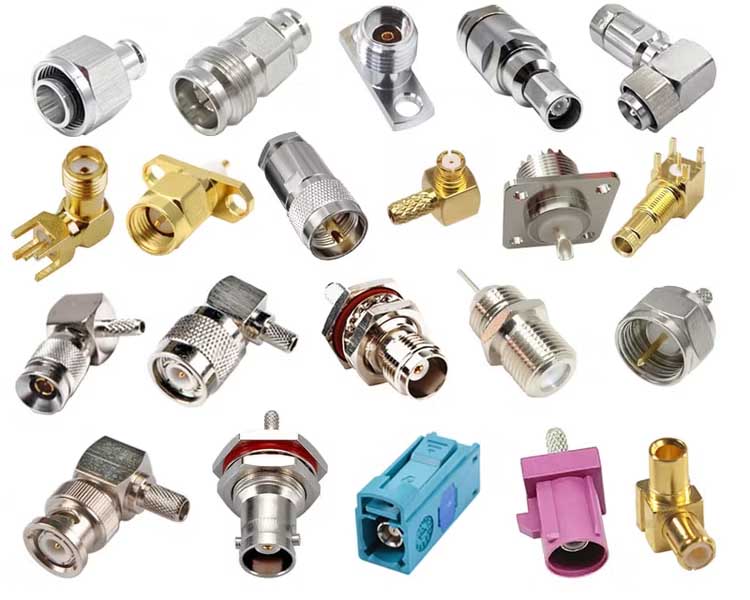
Kina tilpasset BNC hann til SMA hann RF koaksial koblingskabelmontering med Rg58 kabel – Kabelmontering
Utvikling av RF-koaksialkontakt
Oppfinnelsen av RF- og mikrobølgekoaksiale kontakter går tilbake til 1940-tallet under andre verdenskrig. Med fødselen av radar og diverse radiokommunikasjonsutstyr, kontakter som N og BNC dukket først opp.
Med utviklingen av radar, radio- og mikrobølgekommunikasjon, N, C, TNC, og andre serier er produsert. Etter 1958, miniatyriserte produkter som SMA, SMB, og SMC dukket opp. I 1964, den amerikanske militærstandarden MIL-C-39012 "General Specification for Radio Frequency Coaxial Connectors" ble formulert. Fra da av, RFC begynte å utvikle seg i retning av standardisering, serialisering, og generalisering, så den tidligste utviklingen startet fra den militære ingeniøravdelingen.
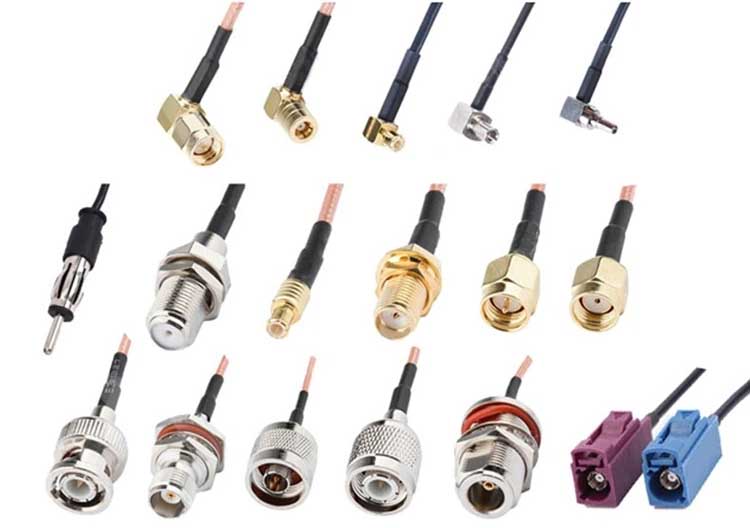
Kina tilpasset QMA hunn til SMA SMB SMC N UHF BNC TNC FME F MCX MMCX CRC9 TS9 RG316 koaksialkabel
N-type kontakten oppsto i 1942 og er oppkalt etter oppfinneren, Paul Neill. Den opprinnelige arbeidsfrekvensen var 4GHz, og den ble forbedret til 11GHz etter 1960-tallet. Presisjonstypen kan fungere opp til 18GHz, og det er en av de mest brukte kontaktene. Det er to spesifikasjoner på 50Ω og 75Ω, som ikke kan kobles sammen. Den indre diameteren til den ytre lederen er 7 mm. Type N er lik den kinesiske standarden L16, men de to er ikke kompatible og krever en dedikert N-L16-adapter.
BNC er den tidligste radiofrekvens koaksiale kontakten, under andre verdenskrig. På grunn av krigens presserende behov, ulike typer skip og luftbåren elektronisk utstyr ble skadet, forårsaker en stor mengde skade på amerikanske marine- og luftkampvåpen som skal repareres. In order to shorten the repair time, the U.S. Department of the Navy gathered some excellent researchers and engineers to invent the quick mating and separation connector BNC in a short period of time, which became a plug-in N-type connector. It is the originator of RF coaxial connectors all over the world. Commonly used in low-frequency circuits, the inner diameter of the outer conductor is 6.5mm. Similar to the Chinese standard Q9, but not fully compatible.
TNC is an acronym for Threaded Neill–Concelman. Do you see Neill-Concelman familiar? By the way, the NC of TNC is the same as the NC of BNC, that is to say, they have the same inventor. The TNC connector is a variant of the BNC connector and an improved version of the BNC, og dens frekvenskarakteristikker er i utgangspunktet de samme som N-typen. TNC bruker en gjengeforbindelse.
APC/7mm-kontakten (Amphenol presisjonskontakt) oppsto på 1960-tallet. Amfenol standard, ikke-polar, er den laveste stående bølgen blant alle kontakter opp til 18GHz, ofte kjent som "flat kobling". Vanligvis funnet i nettverksanalysatorer. Den indre diameteren til den ytre lederen er 7 mm.
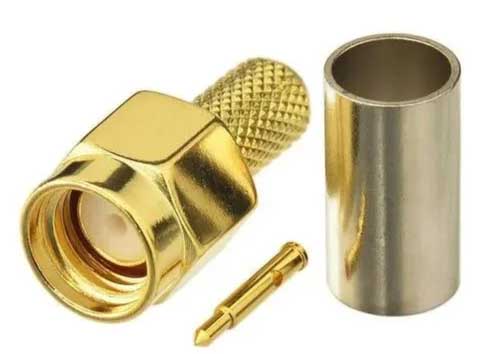
Tilpasset SMA-kontakt RF-koaksial SMA-C-J1.5 rett hannhode, indre skrue, indre hull for RG316 RG174-kabelkontakter
HN-type-kontakten er en høyspentversjon av N-type-kontakten introdusert på 1950-tallet. Den kan fungere opp til en spenning på 5kV, og størrelsen er nær N-type, men kraftkapasiteten er større.
DIN7-16-kontakten (Tysk industristandard) er avledet fra 6-16 (60Åh) kontakt oppfunnet av Spinner. Den ytre diameteren på den indre lederen er 7 mm, og den indre diameteren til den ytre lederen er 16 mm, som er kontakten med best passiv intermodulasjon (PIM) ytelse blant alle koblinger. Vanligvis funnet i cellulære basestasjoner og kringkastede TV-sendere. Kompatibel med kinesisk standard L29.
SMA ble designet av Bendix på slutten av 1950-tallet for halvstive koaksialkabler. Dens matchende plass er fylt med polytetrafluoretylenmedium, og strukturen er relativt enkel. Denne kontakten var ikke ment å brukes på lenge, enn si betraktet som en presisjonskobling, så det er kun en kobling for vanlige systemer. Men det er sannsynligvis den mest brukte kontakten i verden.
3.5mm kontakt: På midten av 1960-tallet, the U.S. Department of Commerce etablerte et felles industriforskningsråd (JIRC) for standardisering av små presisjonskoaksiale kontakter. Etter forsøk på å foreslå en sivil produktstandard i 1972, størrelsen på luftoverføringsledningen ble redusert til 3,5 mm, og frekvensen under modellløs arbeidstilstand ble utvidet til 36GHz. Imidlertid, på grunn av sin høye presisjon og høye pris, den har blitt hindret i å bli mye brukt som en generell kobling. På grunn av situasjonens behov, selskaper som Hewlett-Packard har utviklet en høy presisjon, relativt billig 3,5 mm kontakt. Legg til et beskyttelsesdeksel uten slisser på utsiden. Nominell driftsfrekvens opp til 33GHz. 3,5 mm-kontakten er kompatibel med SMA og kan dokkes uten tap. I SMA arbeidsfrekvensområdet, VSWR-egenskapene til 3,5 mm-kontakten ligner på SMA. The 3.5mm connector is especially suitable for test equipment due to its precision and good wear resistance.

Choosing the Right Connector-A Guide to BNC, TNC, SMA, MCX, MMCX, and IPEX-U.FL at China
The 2.92mm connector is similar to the 3.5mm connector in structure, but it is smaller, allowing the operating frequency to 46GHz, and its inner conductor size is the same as SMA at 0.05 tommer (1.27mm). The 2.92mm connector was first developed by Maury Microwave (MPC-3 type). Such connectors developed by other companies include K-type, KMC-type, WMP4-type, osv.
The K-type connector was developed by Wiltron in 1983 (Wiltron was acquired by Japan’s Anritsu in 1990), and it is compatible with SMA, 3.5mm, and WSMA connectors. The heart of the K-type connector is its transition device, which uses a glass insulator to realize the rigid transition from the coaxial connector to the microstrip circuit, which ensures that the circuit will not be damaged when the connector is replaced or repaired.
The 2.4mm coaxial connector was invented by Julius Botke and Paul Watson in 1986 and is compatible with 1.85mm connectors. Also known as OS-50 type, the inner diameter of the outer conductor is 2.4mm. The successful development of the 2.4mm coaxial connector marks a new step in the development of millimeter wave connectors. A series of small coaxial connectors developed in front of it have made many improvements in structure, but the robustness and repeatability of the connectors are still not improved enough. This creates a cascade of problems with instrumentation and calibration standards, where greater alignment, robustness, and repeatability are required.
The 2.4mm connector can be used in a wide range of fields, and it is the first product with three grades: production grade, instrument grade and measurement grade.
1.85 and 1.0mm connectors; Hewlett-Packard Company of the United States is a manufacturing company engaged in electronic equipment and components, and it has been in a leading position in the development of millimeter wave connectors. At the European Microwave Conference in 1986, they introduced the 1.85mm connector for the first time, extending the working frequency to 65GHz. Seinere, Wittron Company (Wiltron Company was acquired by Japan’s Anritsu in 1990) was improved and announced in January 1989 that the 1.85mm (V-type) connector was used in the 360-type network analyzer, and it was compatible with the 2.4mm connector. The structural form of the V-type connector is the same as that of the K-type, but the size is smaller. It is also connected to the microwave circuit with a transition – a glass insulator whose center conductor is only 9 mils (0.23mm) in diameter.
The 1.35mm connector will be launched around 2020 by the German National Institute of Metrology, the German Federal Institute of Physics and Technology, Rohde & Schwarz, Rosenberg High Frequency Technology and SPINNER.
In the 1990s, Hewlett-Packard announced that they had successfully developed a 1.0mm connector with an inner conductor diameter of about 0.43mm (50Åh) and a maximum operating frequency of 110GHz, which is a top microwave connector.
The 0.8mm connector is currently the world’s smallest millimeter-wave top connector. The 0.8mm and 1.0mm connectors have some similarities, have similar structural dimensions, and have similar physical appearances. But the interior of the two is quite different. Although the technology of the 1.0mm connector can be used for reference, the 0.8mm connector still needs some new designs to obtain better performance.
For eksempel, the ME7838D series broadband vector network of Anritsu Company uses a 0.8mm coaxial calibrator.