 English
 العربية
 bosanski jezik
 Български
 Català
 粤语
粤语 中文(漢字)
 Hrvatski
 Čeština
 Dansk
Dansk Nederlands
 Eesti keel
 Suomi
Suomi Français
 Deutsch
 Ελληνικά
 עברית
עברית Magyar
 Italiano
 日本語
日本語 한국어
한국어 Latviešu valoda
 Bahasa Melayu
 Norsk
Norsk پارسی
پارسی Polski
 Português
 Română
 Русский
 Cрпски језик
 Slovenčina
 Slovenščina
 Español
 Svenska
 தமிழ்
தமிழ் ภาษาไทย
 Tiếng Việt

MRJ21 pistiku disaini eesmärk on suurendada elektroonikaseadmete pakenditihedust, parandada Gigabit Etherneti jõudlust (Kanna), ja lühendage selle paigaldamise aega. Hiljutised arengud I/O-pistiku tehnoloogias võivad aidata lahendada paljusid probleeme, mis on seotud võrgu uuendamise ja uue võrgukujundusega. Võrgu loomiseks ja sidepidamiseks kasutatavad kaks peamist sisend-/väljundühendust on modulaarne pistik ja 25-paariline RJ-21 pistik.. Selliseid tooteid on palju erinevaid, mille hulgas on enim levinud RJ-45 ja RJ-21 tüüpi pistikud. Need pistikud tagavad töökindluse ja lihtsuse, mis on vajalik seadme töötamiseks 10/100 Base-T ribalaius.
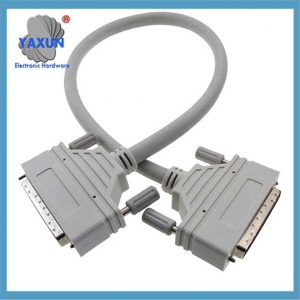 CN68 68-kontaktiline MDR SCSI I O signaali isane ühenduskaabel servoajami jaoks 0,5 m |
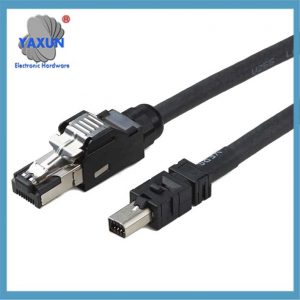 2-2205133-3 Ühendatavad I/O-kaablite komplektid |
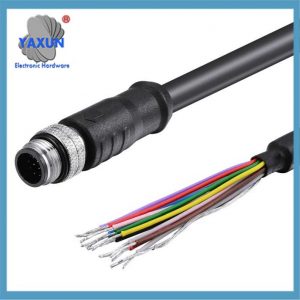 m12 12 pin kaabel Ühendused toitejuhe I/O päästikukaabel |
Siiski, kuna selle Gbit Etherneti süsteemi rakendusala muutub järjest laiemaks, Samuti ilmnevad üha enam paljud olemasolevate RJ-45 ja RJ-21 ühendusseadmete puudused. Et kohaneda sidevõrgu toodete suure hüppega Gbit Etherneti ajastule, olemasolevad elektroonikatooted on mõnes aspektis edasi arenenud, ja nagu aeg nõuab, on tekkinud ka uued I/O-pistikud.
Praegu, inimesed on välja töötanud Gbit Etherneti rakenduste jaoks sobiva MRJ21-tüüpi I/O-pistiku, laiendades seeläbi olemasoleva RJ-21 I/O-pistiku tihedust 3 korda originaal. Mitte ainult seda, kasulik on ka olemasoleva võrgusüsteemi üleviimine Gbit Ethernetile, ja teostada teiste võrkude edasist uuendamist. MRJ21 miniatuurne PC-plaadi pistik, mille on välja töötanud Tyco Electronics, näidatud joonisel 1, pakub täielikult varjestatud ja positiivse kinnitusega kruvitungraua riistvara. Seda pistikut saab rakendada peaaegu kõigi võrgu riistvaraseadmete jaoks. Need võrguriistvaraseadmed on traditsiooniliselt varustatud standardsete virnastatud modulaarsete pesadega või 50-kontaktiliste RJ-21 pistikutega toodetega. (Arv 2). Originaalseadmete tootjad (OEM-id) Etherneti lülitite tootmine, võrgukapid, ruuterid, digitaalsed džemprid, DSLAM-id, ja sarnased tooted võivad muuta oma kujundust, et need sobiksid uue MRJ21 pistikuga.
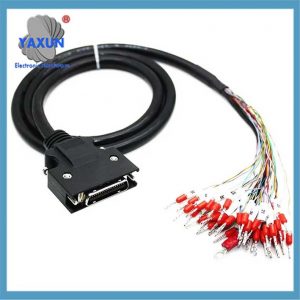 36kontaktilise servo I/O juhtkaabli 10136-3000PE KOHTA, 10336-52A0-008 pistik Signaalikaabel |
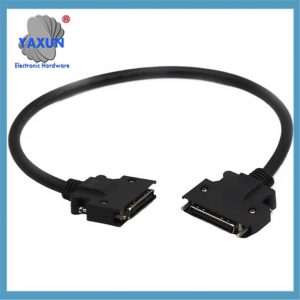 Servomootori I/O juhtkaabel Mootori signaalikaabel SCSI pistik SCSI14 SCSI26 SCSI20 SCSI36 SCSI50 0,5 meetrit 1 meeter 2 meeter |
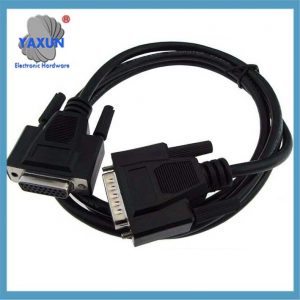 DB26 sisend- ja väljundsignaali isane-emane ühenduskaabel 5FT(1.5m) |
Arv 1 MRJ21 mikroarvuti plaadi pistik
In addition to allowing networks to operate properly in Gigabit Ethernet environments, the MRJ21 connector is more compact than previous modular jack and RJ-21 designs. Higher density solutions for networking I/O interfaces have been devised. And through corresponding tests and verifications, not only can the synchronous transmission of the Gbit Ethernet system be reliably completed, but also power transmission can be performed through the Ethernet (PoE or PoLAN).
For hardware designers, the increase in connector density means that the I/O interface density can be increased by 1.5 juurde 3 times compared to the original stacked RJ-45 modular jack. Compared with the RJ-21 connector, the size of the MRJ21 connector is reduced by 2/3. Lisaks, the right-angled socket is 50% shorter than the standard stacked jack, nagu on näidatud joonisel 3.
Arv 3 MRJ21 ja RJ-21 pistikute võrdlus
Täna, inimesed saavad kasutada 16 MRJ21 pistikud moodustamiseks 96 GbE liidesed või 192 10/100 liidesed tavalistel vasklehtedel. See tähendab ka seda, et selle Gbit Etherneti liidese tihedus on kahekordistunud võrreldes RJ-45 pistikutega, mis võimaldab igal 1RU paneelil genereerida kokku kuni 48 ühendatavad liidesed. See vähendab või lihtsustab juhtmestike arvu klemmiplokis. See on originaalseadmete tootjate jaoks väga atraktiivne, seadmete paigaldajad ja kasutajad.
Arv 4 tähistab tüüpilise MRJ21 koostu iga kuue liidese läbirääkimisväärtusi. Kõver (PS ELFEXT) joonisel a kujutab esimese konnektoriliidese paari kaugläbirääkimise väärtuse muutumise kõverat 1, teine liideste paar 1, kolmas liideste paar 1 and the fourth pair of connector interfaces 1. The curves in figure b respectively represent the variation curves of near-end crosstalk values of the first pair of connector interfaces 1 , teine liideste paar 1 , kolmas liideste paar 1 and the fourth pair of connector interfaces 1 .
For networking hardware OEMs, the advantages of this packaging are obvious. In addition to packing more I/O interfaces into a given box design, the MRJ21 connector offers other design improvements. Näiteks, the MRJ21 connector has electrical characteristics that can suppress alien line crosstalk to meet or exceed the specified category 5e cable requirements, and it has complete shielding performance to suppress its electromagnetic interference. Lisaks, the use of a screw socket provides the necessary positive locking function.
As interface density increases, OEMs have options to improve the functionality or features of their devices. And other advantages are provided to users in the form of spare interfaces so that users can expand or upgrade their networks. With spare interfaces, users or equipment installers can connect more devices or devices on the network, thereby achieving the purpose of further reducing costs, nagu on näidatud joonisel 4.
2. MRJ21 connector structure design
As system designers are interested in a high level of technological advancement, several MRJ21 connectors with different configurations have been introduced to meet various application requirements in the Gigabit Ethernet environment and networking fields. These configurations include single-port MRJ21 (choice of panel ground and non-panel ground, through-hole solder, and press-fit, both of which have the same board layout and same size) and dual- and quad-port MRJ21s with integrated magnetics Connector components.
MRJ21 interconnects have been designed to be simpler and have lower crosstalk noise levels than RJ-45 and RJ-21 interconnects. It minimizes the possibility of causing alien crosstalk and creates a method of noise compensation that does not require the myriad of proprietary RJ-45 interconnects. These design features can maintain continuity and excellent link electrical characteristics, making interconnect devices more suitable for gigabit applications.
Network system installers using MRJ21 connectors and cable assemblies are also seeing improved performance. Esimene, the switch’s cable management has been further improved because it requires only one cable (compared to six cables required in Gigabit Ethernet or 10/100/1000 rakendusi). And in 10/100 rakendusi, the number of cables is also reduced from 12 juurde 1. Pealegi, the only cable is about 30% smaller than the cross-sectional area of the corresponding six 4-pair cables. Lisaks, due to the increased density of the PCB board, the resulting I/O interconnection device has a smaller form factor, and the visibility of the sensitivity display on the hardware is also greatly improved. Overall costs to end equipment users may also be further reduced.
After using the MRJ21 connector in infrastructure cabling, equipment manufacturers and service providers can expect additional advantages. Lisaks, a dedicated study of the four associated cost savings (tööjõud, space, time and maintenance) also shows that MRJ21 cable devices can provide many potential cost-saving opportunities.
In labor cost studies, it has been estimated that using MRJ21 connectors can save $3.50 juurde $14 per interface in direct installation costs compared to traditional RJ-45 based cables. The study also showed that the space occupied by MRJ21 connectors installed in the above equipment can save about $4.50/interface per year, because the data center can occupy less space. In the high-cost and important application environment of this study, the savings in the area occupied by the equipment can reach more than 50%.
Lisaks, the study concluded that the time required to connect the data center is about 1/6 of the time spent on traditional wiring. Lõpuks, the study demonstrated significantly less downtime for switch replacement or restoration of functionality.
Arv 4 Crosstalk value of each of the 6 interfaces in the MRJ21 component
As interface density increases, OEMs have options to improve the functionality or features of their devices. And other advantages are provided to users in the form of spare interfaces so that users can expand or upgrade their networks. With spare interfaces, users or equipment installers can connect more devices or devices on the network, thereby achieving the purpose of further reducing costs, nagu on näidatud joonisel 4.
2. MRJ21 connector structure design
As system designers are interested in a high level of technological advancement, several MRJ21 connectors with different configurations have been introduced to meet various application requirements in the Gigabit Ethernet environment and networking fields. These configurations include single-port MRJ21 (choice of panel ground and non-panel ground, through-hole solder, and press-fit, both of which have the same board layout and same size) and dual- and quad-port MRJ21s with integrated magnetics Connector components.
MRJ21 interconnects have been designed to be simpler and have lower crosstalk noise levels than RJ-45 and RJ-21 interconnects. It minimizes the possibility of causing alien crosstalk and creates a method of noise compensation that does not require the myriad of proprietary RJ-45 interconnects. These design features can maintain continuity and excellent link electrical characteristics, making interconnect devices more suitable for gigabit applications.
RJ-45 interconnect device interface
Network system installers using MRJ21 connectors and cable assemblies are also seeing improved performance. Esimene, the switch’s cable management has been further improved because it requires only one cable (compared to six cables required in Gigabit Ethernet or 10/100/1000 rakendusi). And in 10/100 rakendusi, the number of cables is also reduced from 12 juurde 1. Pealegi, the only cable is about 30% smaller than the cross-sectional area of the corresponding six 4-pair cables. Lisaks, due to the increased density of the PCB board, the resulting I/O interconnection device has a smaller form factor, and the visibility of the sensitivity display on the hardware is also greatly improved. Overall costs to end equipment users may also be further reduced.
MRJ21 connector structure design drawing
Arv 6 Structural design diagram of MRJ21 connector
After using the MRJ21 connector in infrastructure cabling, equipment manufacturers and service providers can expect additional advantages. Lisaks, a dedicated study of the four associated cost savings (tööjõud, space, time and maintenance) also shows that MRJ21 cable devices can provide many potential cost-saving opportunities.
In labor cost studies, it has been estimated that using MRJ21 connectors can save $3.50 juurde $14 per interface in direct installation costs compared to traditional RJ-45 based cables. The study also showed that the space occupied by MRJ21 connectors installed in the above equipment can save about $4.50/interface per year, because the data center can occupy less space. In the high-cost and important application environment of this study, the savings in the area occupied by the equipment can reach more than 50%.
Lisaks, the study concluded that the time required to connect the data center is about 1/6 of the time spent on traditional wiring. Lõpuks, the study demonstrated significantly less downtime for switch replacement or restoration of functionality.
Advances in I/O Interconnect Devices
One of the most advanced I/O application areas for next-generation modular jacks is 10/100 Base-T transmission, Gigabit Ethernet, and Power Ethernet integration. The essence of 10/100 Base-T transmission and Gbit Ethernet is basically the same thing. It’s just that transferring power through an Ethernet connector is a relatively new problem, and the interconnects used in such applications require careful consideration.
Transmitting high-speed signals through a network is a challenge in itself, and adding the burden of low-power devices to the network places new challenges on an interconnect system.
Esimene, because transmitting high-speed signals over a network that already carries the signal itself is prone to interference, it is extremely important to protect the signal contacts from interference that may occur in the lower power regions of the interconnection system. Some designers may choose to properly filter the interconnect leads on the board to reduce interference. Siiski, this increases the complexity of the circuit board processing in the manufacturing process, increases the corresponding cost and requires more effort.
Yet another option is to use an integrated or combined MRJ21 connector. The combined MRJ21 connector can realize 10/100/1000 Base-T transmission, and can also use PoE pins. The combination of integrated magnetics and power management eliminates the need for time-consuming and costly board-level solutions.
Integrated magnetics provide some of the following essential functions:
(1) Provide the DC insulation requirements proposed in IEEE 802.3 ja IEC 60950;
(2) Provide the anti-electromagnetic interference (EMI) function of the normal mode;
(3) The DC power supply can be applied to the PoE field by using integrated magnetic components.
When the MRJ21 crimp gang connector switch is applied to Ethernet, the advantages of power devices with network support can be further extended throughout the network.
One of the important attributes of the MRJ21 ganged magnetics connector is its flexibility. The connector can be designed as non-PoE or with PoE function. With this design approach, network systems transitioning from 10/100 and GbE 802.3af-compliant PoE is much easier.
kokkuvõtteks:
Product development seems to have gotten easier in recent years, further proving the role of I/O interconnects and taking them to the next level. These next-generation I/O connectors can provide higher packaging density and performance, not only to improve their shipping and handling conditions, but also to further improve their manufacturing process. Sellisena, it affects not only OEMs, but also installers and users of equipment. Most importantly, the application of these new I/O interconnect devices can not only make Gbit Ethernet and active Ethernet easier to implement, but also further improve network functions and work efficiency.